Read for timing, not just ingredients
Before you pick up a knife, read the recipe from beginning to end. Look for steps that need advance attention: an oven that must preheat, a pot of water that must come to a boil, or a sauce that simmers while everything else cooks. This quick scan helps you decide what to do first. A recipe’s ingredient list tells you what you need; its method tells you when you need it.
Notice the difference between a step that needs your full attention and one that can run in the background. If onions will cook slowly before the rest of the vegetables go in, you may not need every vegetable chopped before turning on the stove. If the cooking moves quickly, as it does for a stir-fry, get the ingredients ready first. Prep should support the meal’s pace, not become a separate project.
Set up a small, useful workspace
Clear enough counter space for a cutting board and the ingredients you are working on. Set out a stable board, a sharp knife, a bowl for scraps and a clean plate or tray for prepared food. Pull the pantry items you expect to use, too. Finding the vinegar or opening a can is easier before a hot pan needs your attention.
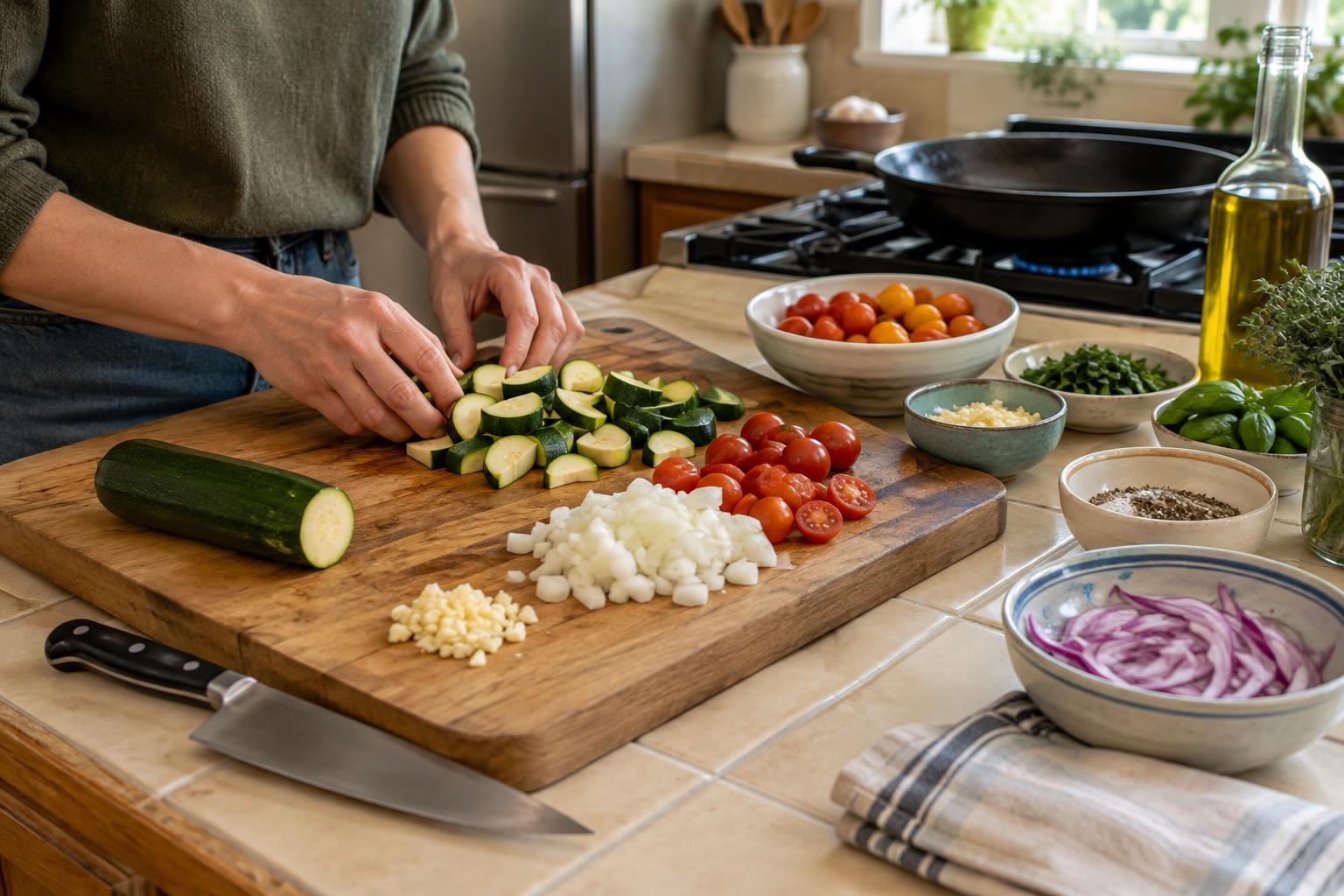
You do not need a row of tiny bowls for every measured ingredient. Group items by when they enter the pan: aromatics together, vegetables together, and sauce ingredients in one cup if they are added at the same time. Keep seasonings where you can reach them. This gives you the benefit of having everything ready without creating a sink full of extra dishes.
Prep in an order that keeps things moving
Start with tasks that can be done without making a mess. Measure dry ingredients, mix a simple dressing or sauce, and open packages. Then prepare produce, moving from items that are easy to handle to those that leave the board wet or crowded. For a dinner built around Central Valley vegetables, that might mean trimming herbs, slicing peppers and then chopping juicy tomatoes.
Cut ingredients to suit how they will cook. Smaller pieces generally cook faster than larger ones, so try to make pieces within each ingredient roughly similar in size. They do not all need to look identical. Keep delicate herbs or tender greens separate from sturdy vegetables if they go into the dish near the end. A few thoughtful piles on a tray can make the sequence clear when it is time to cook.
Handle ingredients with care
Rinse fresh produce under running water before cutting it, including produce with a peel you will remove. Use clean hands, utensils and surfaces. If your meal includes raw meat, poultry or seafood, keep it and its juices away from ready-to-eat ingredients. Use a separate board if you have one, or wash the board and knife thoroughly with soap and water before switching to vegetables or other foods that will not be cooked.
If you prep well before dinner, cover and refrigerate perishable ingredients rather than leaving them on the counter. For a short cooking session, you can bring out what you need as you need it. Keep a clean plate ready for cooked food instead of reusing one that held raw ingredients. These habits fit naturally into the workflow once you plan a place for each ingredient.
Leave room to adjust while you cook
Ingredient prep is a starting point, not a promise that dinner will follow a script. Set a spoon nearby for tasting, and keep salt, an acidic ingredient such as lemon juice or vinegar, and any finishing herbs within reach. As the dish comes together, you can decide whether it needs more seasoning, a little brightness or simply another minute in the pan.
Build a brief reset into the transition from prep to cooking: move scraps out of the way, put away ingredients you no longer need, and check that the next step is clear. Wash a tool during a quiet simmer if it is convenient, but do not let cleanup distract you from the stove. The goal is not a perfectly tidy kitchen. It is a workspace that lets you focus on dinner and enjoy serving it.