Start with the path guests will take
Before setting out food, walk through the room as a guest would. Where will people arrive? Where will they pick up a plate? Where will they go once it is full? A buffet needs more than a long table: it needs a clear beginning, enough space to pause and an easy exit toward seating. Keep the route away from a doorway if you can, so new arrivals and people carrying food are not trying to pass through the same narrow spot.
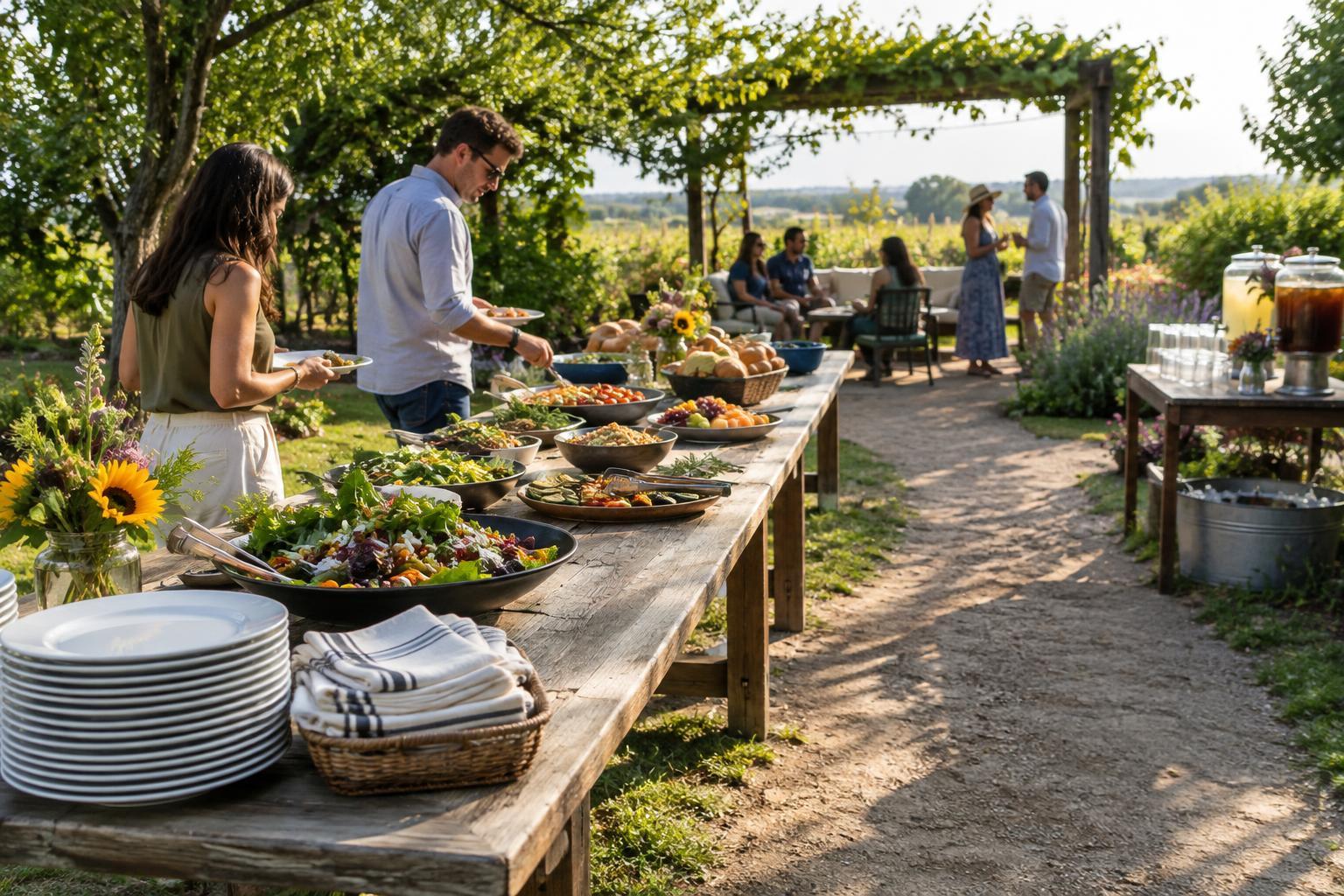
Put plates at the beginning of the line and arrange dishes in the order someone might build a meal. A main dish followed by sides and toppings is easier to navigate than a table that asks guests to double back. If the table is accessible from both sides, consider placing food down the middle with serving utensils on each side. Otherwise, leave enough room in front for people to step aside while deciding what they want. A small gap between dishes can be as useful as an extra foot of table.
Move the slow stops off the main table
Drinks, ice and cups tend to slow people down. Give them a separate spot, ideally one guests can reach without crossing the food line. Keep a place for used cups nearby so the drinks area stays tidy. Napkins and cutlery can go near the end of the buffet, where guests can pick them up after serving rather than juggling them with an empty plate.
Think about which foods invite lingering. A bowl of toppings, several dressings or a dish that needs assembling can create a bottleneck. Group those items at a small finishing station beyond the main spread. For example, a casual meal built around grilled vegetables, beans and warm tortillas could have the vegetables and beans on the buffet, with herbs, sauces and lime wedges farther along. Guests can make choices without holding up everyone behind them.
Make each choice easy to see and serve
A generous buffet does not need a crowded tabletop. Choose bowls and platters that fit their contents, and leave a clear resting place for every serving spoon or pair of tongs. Put heavier dishes where the table feels stable, and keep anything that drips away from its edge. If a dish has a lid, make sure there is somewhere to set it while serving. These small decisions spare guests from having to ask how the setup works.
Short labels are helpful when dishes look similar or contain an ingredient guests may wish to avoid. Name the food plainly rather than relying on a decorative description, and use a separate utensil for each dish. A platter of sliced seasonal fruit or a bowl of crisp vegetables can bring Central Valley produce into a relaxed gathering without making the menu complicated. Cut or portion foods in ways guests can transfer to a plate with one hand.
Refill in manageable rounds
For a gathering that stretches across the afternoon, avoid putting everything out at once. Smaller platters are often easier to carry, fit on the table and replace as needed. Keep backup food prepared and return for it when a dish runs low. This makes the spread feel cared for without requiring the host to stand guard over it.
Plan for the serving conditions of each dish. Follow appropriate food-safety guidance for foods that need to stay hot or cold, and do not leave perishable dishes sitting out indefinitely. If you cannot maintain a suitable temperature on the buffet, offer a smaller amount and replenish it from properly stored food. Place a bin or a discreet spot for used napkins where guests can find it, and make occasional passes to clear empty platters and spills.
Leave room for people to gather
A good buffet gets guests to the conversation, not just through the line. Spread seating across a few comfortable spots if the space allows, and include surfaces where someone can set down a plate and drink. Keep chairs out of the buffet path. If guests will be eating outdoors, look for a level place for the table and consider how sun, wind and foot traffic might affect the setup.
Once guests begin serving, watch the flow rather than trying to perfect every platter. A moved bowl, an extra set of tongs or a relocated stack of napkins may solve a problem faster than a complete rearrangement. The aim is not a formal procession. It is a welcoming setup that lets people choose what they like, move at their own pace and return to the table without getting in anyone's way.