Start with the sun, not the table
Before moving furniture outside, visit the yard around the time you plan to eat. A spot that feels pleasant at noon may be exposed by late afternoon, while a wall or tree may cast useful shade later in the day. Notice where light falls on the table, where guests will sit and whether anyone will face directly into the sun. This quick check is especially useful for a long, unhurried meal.
Look beyond the table itself. Guests also need a comfortable place to arrive, set down a drink and reach the food. If the dining area is shaded but the serving table sits in full sun, people may gather in the hottest part of the yard. Choose a location that gives you room to pull out chairs and leaves a clear route back to the house.
In a Central Valley backyard, a breezy patch of shade can be more inviting than a perfectly styled table in direct sun. Let comfort guide the layout, even if that means using a less obvious corner of the yard.
Choose shade that suits the space
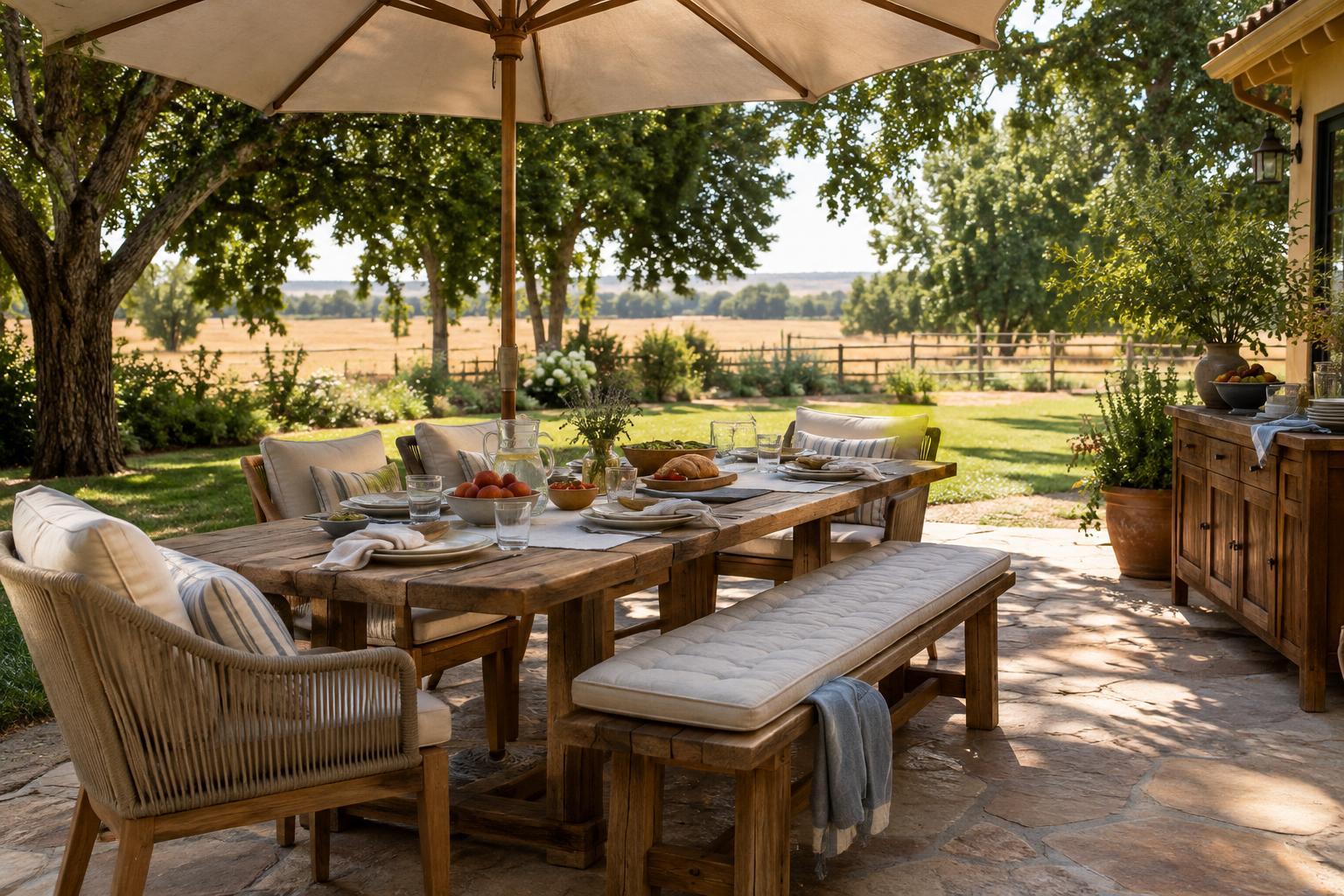
Existing shade is often the easiest starting point. A mature tree, covered patio or shaded side of the house may shelter the table without adding equipment. Check for uneven ground, low branches and drips from sprinklers before committing to a spot. If the shade only covers part of the table, reserve those seats for guests who need a cooler place to sit.
A patio umbrella can work well over a compact table. Make sure its base is appropriate for the umbrella and surface, and position it so people can move around without bumping the pole. For a larger gathering, several smaller shaded areas may be easier to arrange than one canopy over everything. A freestanding canopy offers more coverage, but it needs enough space, secure anchoring and attention to wind. If conditions turn gusty, follow the product guidance and take it down rather than trying to make it work.
Shade cloth or an outdoor sail can be useful in a yard set up for it, but attaching one securely is more involved than hanging a decorative fabric. Avoid improvising with weak tie points or running lines across walking paths. Whatever option you choose, test the setup before guests arrive so you can see both its coverage and its effect on movement around the table.
Make every seat worth taking
An inviting seating plan does not require matching chairs. It does require stable seats at a comfortable height for the table. Give chairs enough room to slide back, and check that their legs rest firmly on the ground. A chair that rocks on pavers or sinks into soft soil will distract from even the best meal.
Mixing benches and chairs can help fit a group, but offer some chairs with backs for guests who prefer more support. If children are joining, plan their places before the table fills up rather than squeezing them into leftover gaps. Seat cushions can soften hard furniture; choose ones that will not slide easily, and keep a dry place to store them if the weather changes.
Think about conversation as well as capacity. A long row of tightly packed seats may hold everyone, but it can make it hard to get up or pass a dish. Leave a little breathing room at corners and at the ends of the table. If the guest list is large, two smaller tables close together can feel more relaxed than one table stretched across the yard.
Give food and guests an easy route
Place a drinks station or serving surface near the dining area, but not where someone pulling out a chair will block it. Keeping water within easy reach encourages guests to settle in, while a separate spot for extra plates and napkins helps prevent the dining table from becoming crowded. For foods that need to stay cold or hot, plan how you will serve them safely rather than relying on shade alone.
Walk the route from the kitchen to the table while carrying an empty tray. Move hoses, planters and spare furniture out of the way, and make sure doors can open fully. If part of the route crosses gravel, grass or a step, consider whether guests can navigate it comfortably. A clear path matters just as much after sunset, when people are carrying dishes back inside.
Finish with small comforts
Once the shade and seats are in place, add only what makes the meal easier to enjoy. A pitcher of water on the table, a few weights for lightweight napkins and a nearby spot for used dishes can do more than elaborate decorations. Keep tall centerpieces out of sightlines so people can talk across the table.
For a meal that may continue into the evening, check the lighting from every seat. Soft outdoor lighting can help guests see their plates and the route to the house without shining into their eyes. Have a simple backup plan if the temperature drops or the wind picks up: move to a covered area, bring out an extra layer or head indoors. The goal is not a flawless outdoor setup. It is a table where everyone can sit down, pass the food and stay awhile.