Start with a loose plan, not a fixed list
A farmers market is most enjoyable when you know what you need but have room to change your mind. Before leaving home, choose one or two meals you could make with flexible ingredients: a vegetable pasta, a grain bowl, a big salad, or a tray of roasted produce. Write down the staples you already have, such as oil, rice, eggs, or beans. That way, you can shop for what looks good rather than trying to find every item in a particular recipe.
Central Valley stalls may offer different choices from one visit to the next. In warmer stretches, you might look for tomatoes, peppers, stone fruit, or summer squash; in cooler stretches, citrus, greens, or sturdy vegetables may be easier to find. Availability depends on the market, the grower, and the weather, so treat those examples as possibilities rather than a shopping checklist. If something you hoped for is missing, ask yourself what could play the same role in your meal: another crisp vegetable, a different fruit, or a bunch of fresh herbs.
Pack for an easy trip home
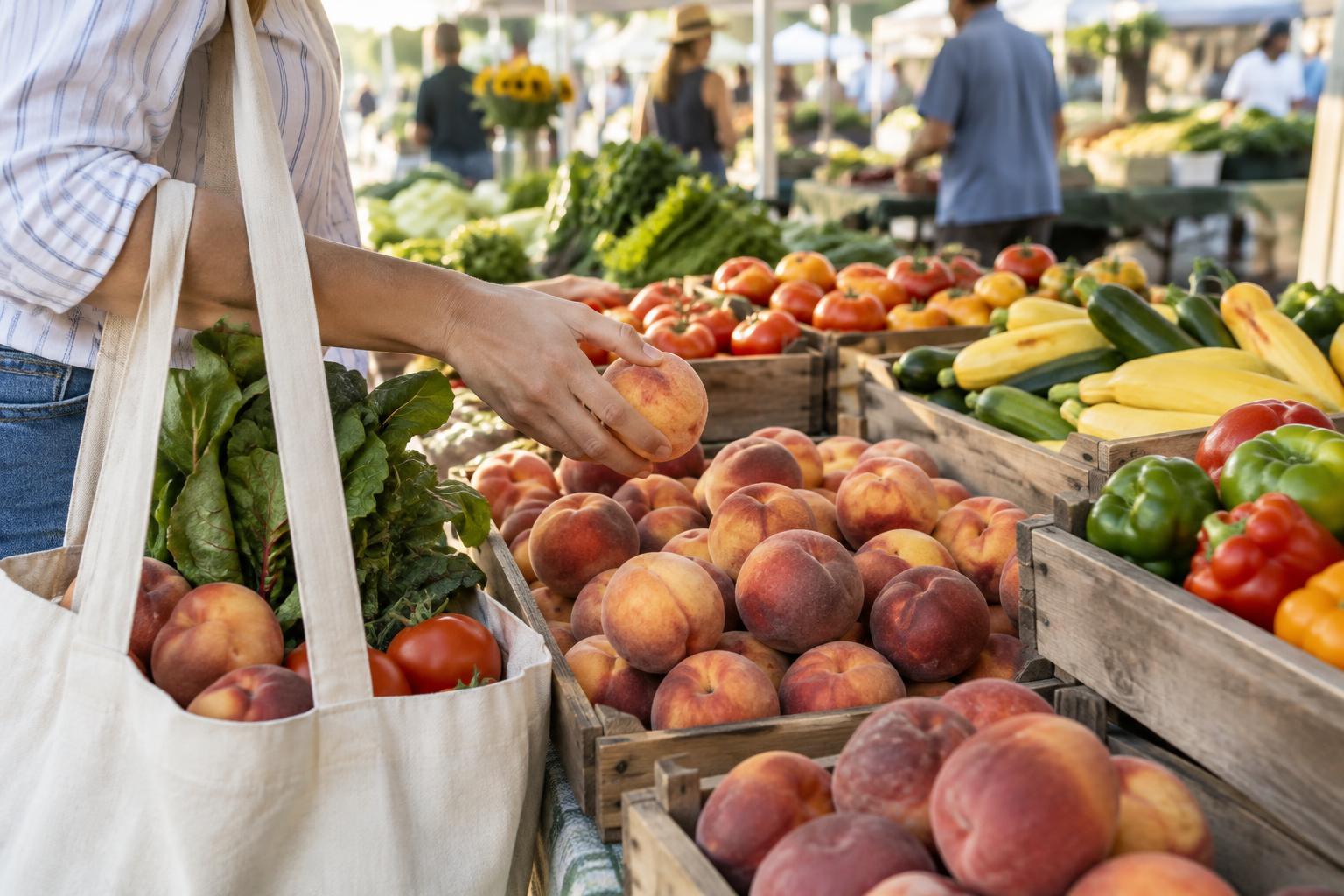
Bring a sturdy bag or basket, and consider a smaller bag for delicate items so they do not end up beneath melons or winter squash. Cash in small bills can be useful, though payment options vary by seller. If you expect to buy food that needs to stay chilled, bring an insulated bag with a cold pack. A bottle of water and comfortable shoes also make it easier to browse without hurrying.
Think about your route home before you buy. If you have other errands to run, save perishable purchases for last or plan to go straight back after the market. Keep softer fruit near the top of your bag, and avoid leaving produce in a hot car. These small decisions protect both your groceries and your enthusiasm for cooking them.
Take one lap before you commit
On your first pass, notice what appears at several stalls, what seems especially appealing, and how items are sold. One stand might offer loose produce while another sells it by the basket or bunch. Read signs for prices and varieties, and check whether a line forms in a particular place before stepping up to pay. A quick lap gives you a sense of the market without making every purchase feel like a snap decision.
You do not need to find the single best tomato or compare every price. Pick a few priorities—perhaps fruit for the week, vegetables for dinner, and one ingredient you have never cooked—and start there. Set a comfortable spending limit if that helps. Buying smaller amounts on a first visit is often more useful than filling every bag, especially if you are still learning how quickly your household eats fresh produce.
Ask questions that help you cook
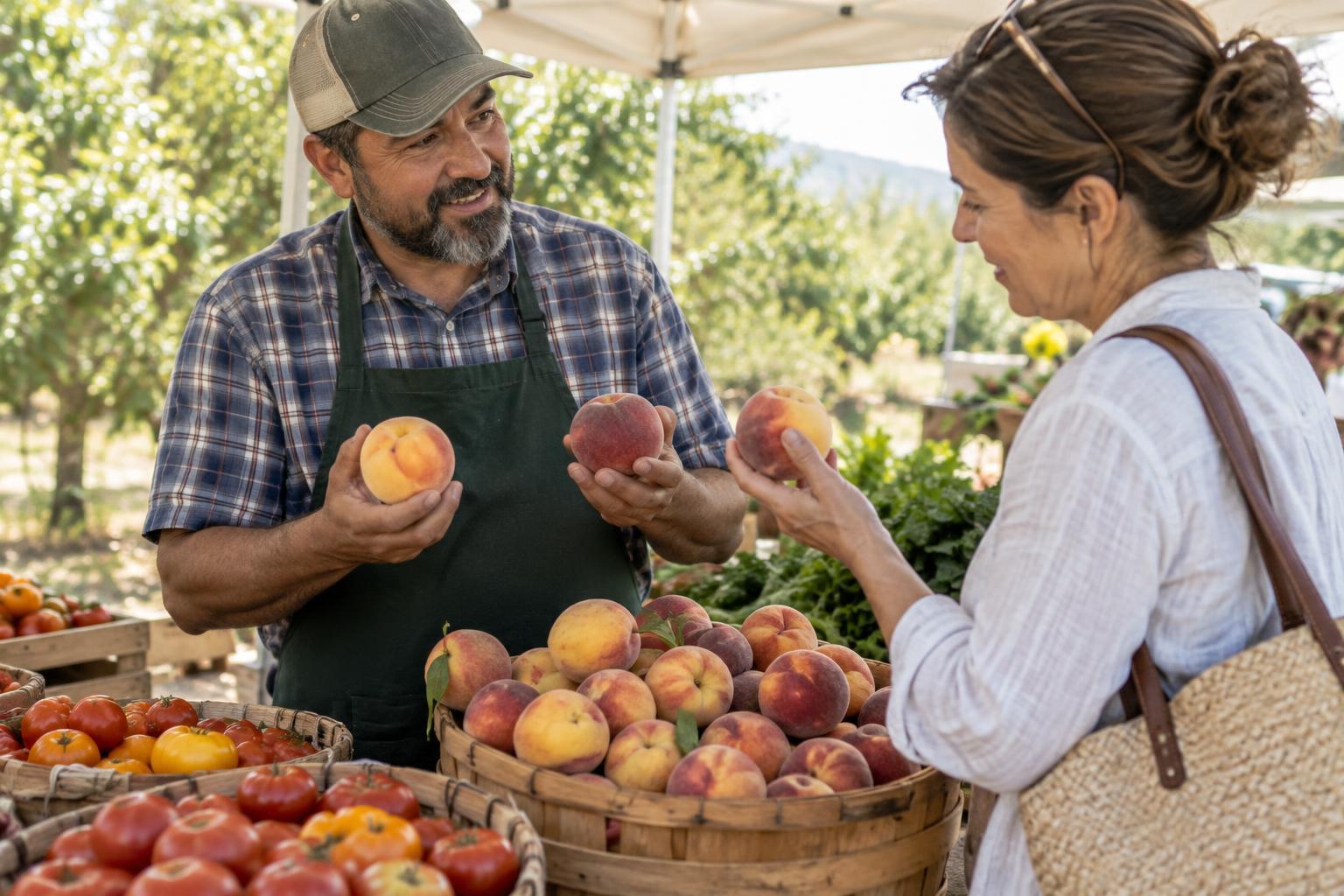
A short, specific question can make an unfamiliar ingredient less intimidating. Try asking, “Is this ready to eat today or better in a few days?” or “Would you use this raw or cooked?” If you see several varieties of the same fruit or vegetable, ask how their flavors or textures differ. Sellers may be busy, so choose a moment when there is space for a conversation and keep your first question simple.
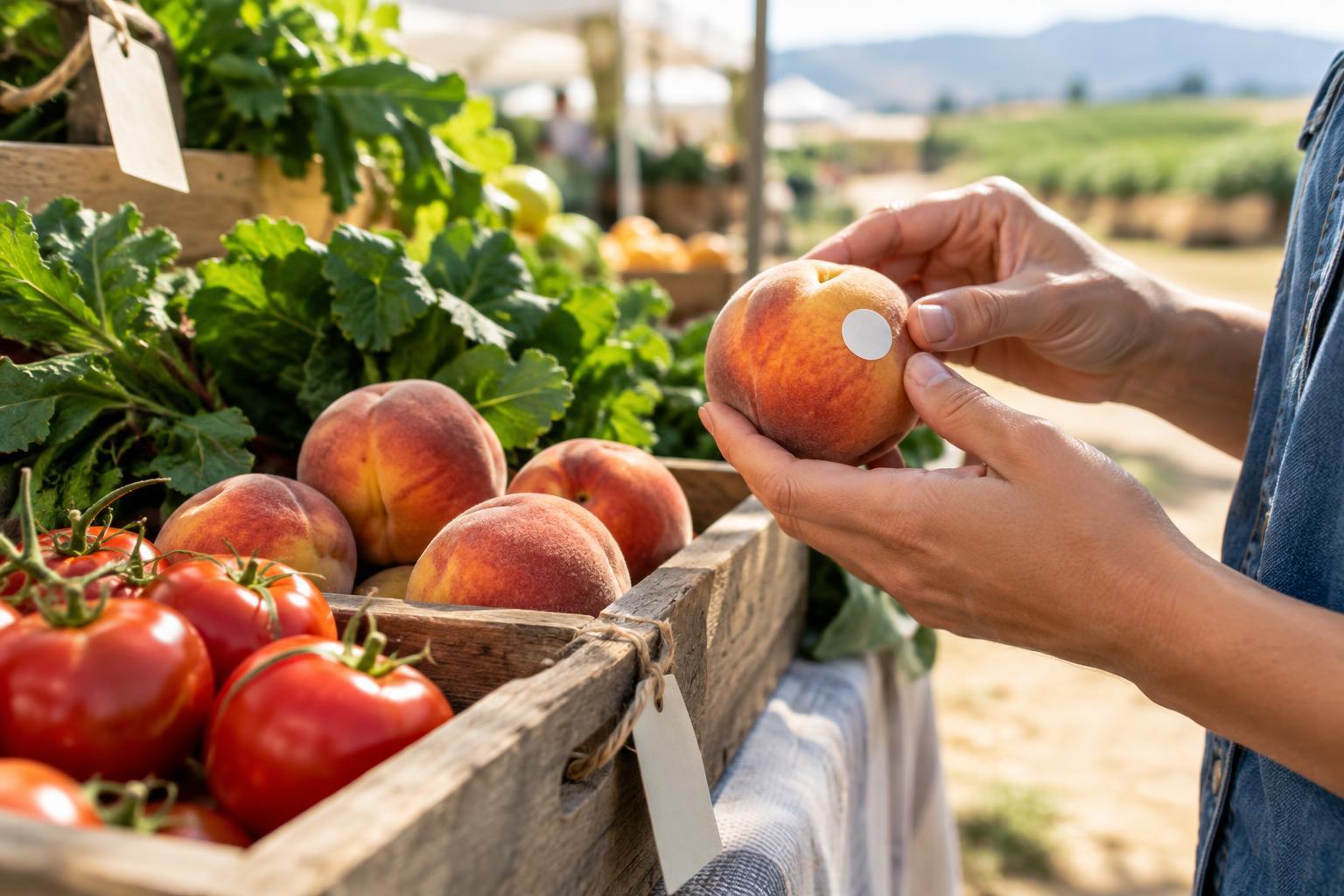
Use your senses, but handle produce gently. Look for items that seem sound and suitable for when you plan to use them, rather than assuming the most uniform pieces are best. If samples are offered, follow the stall’s directions. It is fine to pass on something you cannot use; a thoughtful purchase is better than an impulse buy that sits forgotten in the refrigerator.
Let your haul shape the next few meals
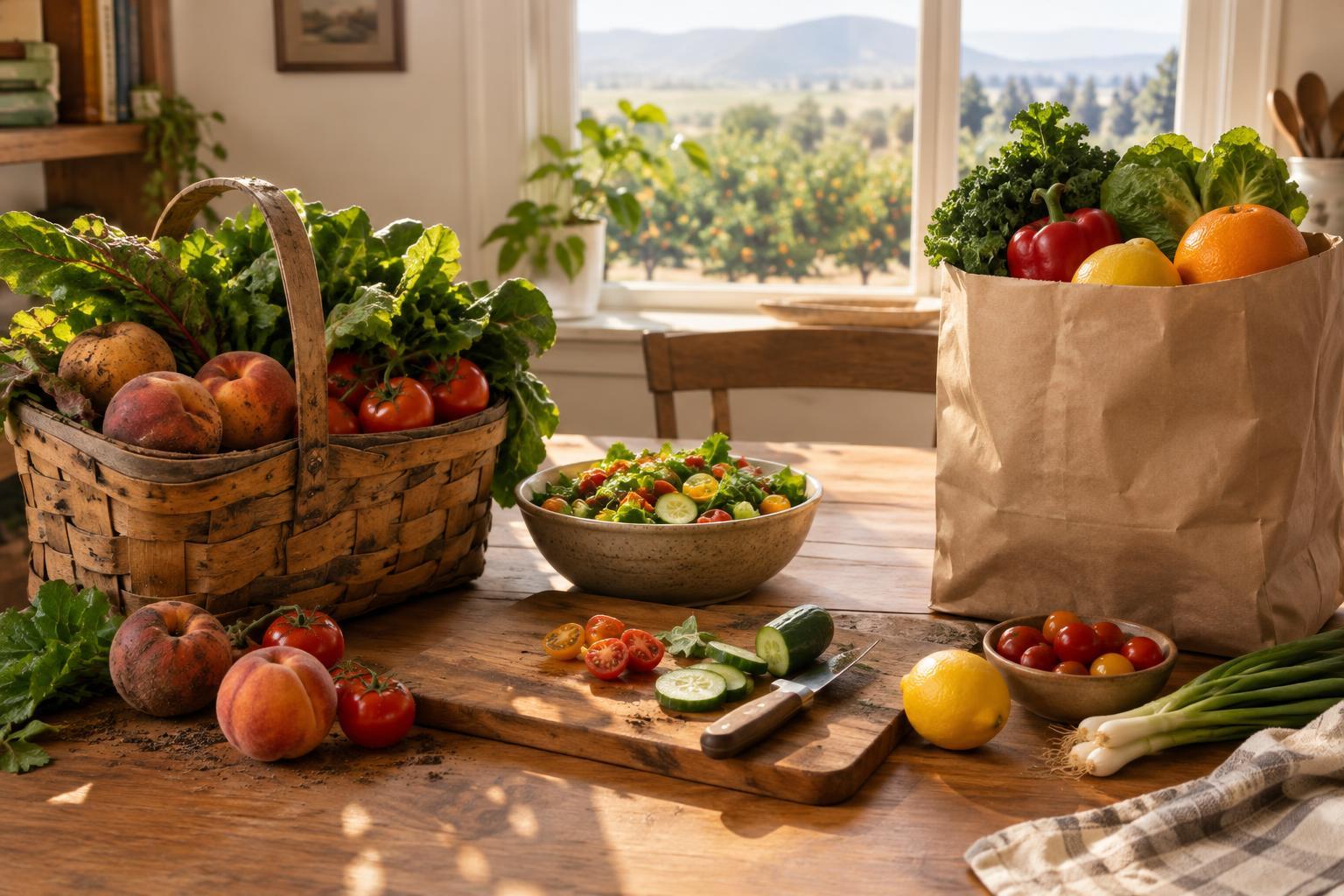
When you get home, unpack the most delicate items first. Check what should be refrigerated and what might benefit from a little time to ripen, then store items separately when needed to prevent bruising. Wash produce before using it, and follow any storage guidance the seller gave you. A quick note on your phone about what you bought can help you remember an unfamiliar variety later.
Build meals around the ingredients most likely to lose their freshness first. Tender greens and ripe fruit can lead the next day’s menu; sturdier vegetables can wait a little longer. A simple meal might be sliced fruit with breakfast, a chopped-vegetable lunch, and roasted vegetables with beans or pasta for dinner. The goal of a first market trip is not a perfect haul. It is to come home with food you are excited to eat—and a better sense of what you want to explore next time.