Start with the exact wording
In a grocery aisle or at a farm stand, it is tempting to treat every name and place on a produce label as an answer to one question: Where did this grow? The wording matters, though. “Grown in” directly addresses the growing location. “Packed in” identifies where produce was prepared for sale, while “distributed by” points to a business that helped move it through the supply chain. Those places may be close together, but a label does not establish that they are.
A California address on a box, for example, is not by itself proof that its contents were grown in California. Likewise, a familiar regional brand might work with multiple growers. Read the phrase attached to the place name before drawing a conclusion. If the label lists a country of origin, that gives you a broad location, not necessarily a state, valley, county, or individual farm.
Know what other label details are for
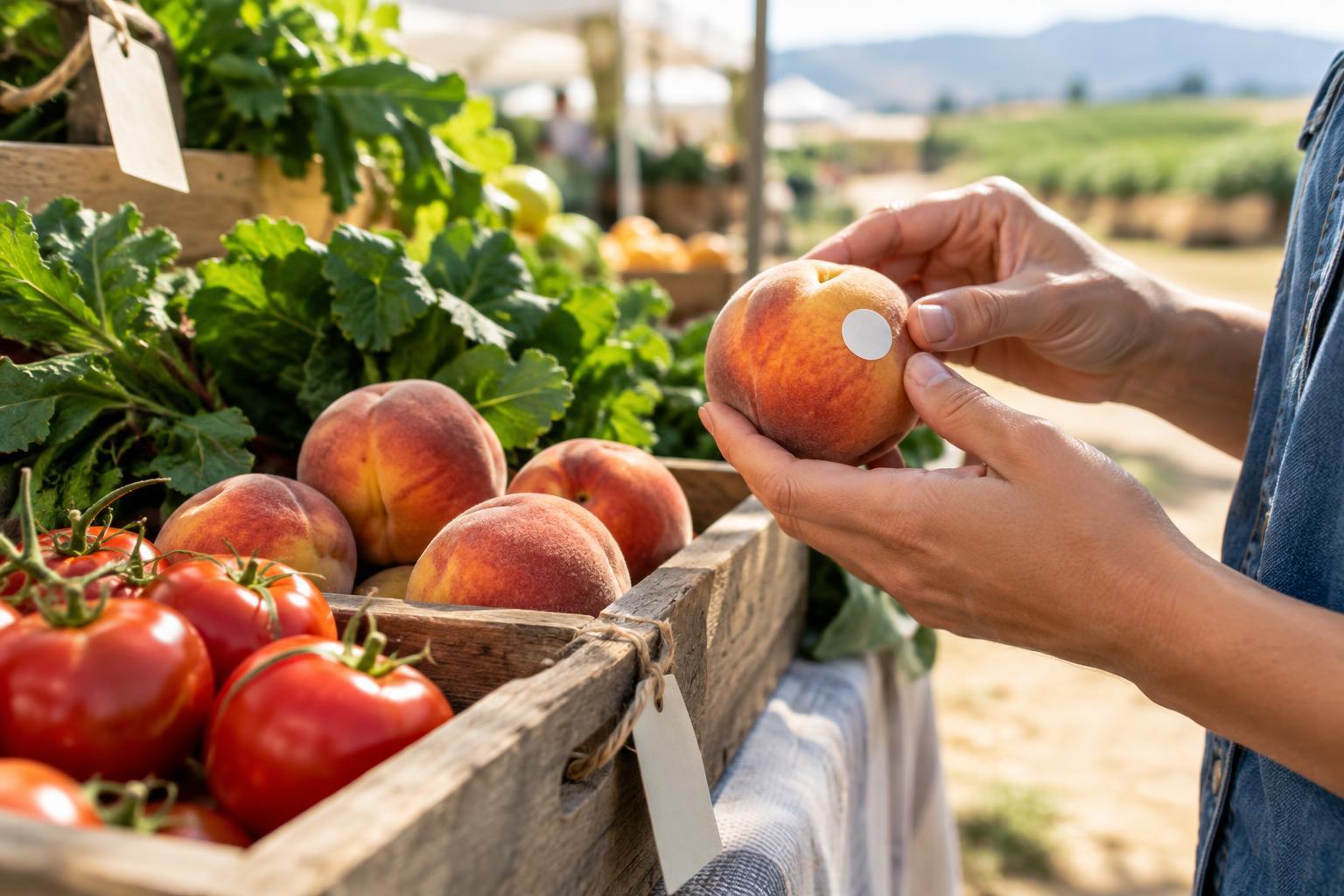
Small stickers, barcodes, lot numbers, and box markings serve different purposes. Some help a cashier identify an item or help a seller manage inventory. Others can help businesses track a shipment. They are not all intended to give shoppers a readable account of the farm, harvest, and route to the store. A code that looks precise may still tell you very little without access to the seller’s records.
Production terms answer other questions. An organic label describes a method of production under applicable standards; it does not mean the food was grown nearby. A variety name tells you what kind of fruit or vegetable you are buying, not where it grew. “Fresh” and “seasonal” can also be useful descriptions, but neither establishes a specific origin. Keeping those distinctions in mind makes labels more helpful—and keeps them from carrying more meaning than they actually provide.
Look for clues without treating them as proof
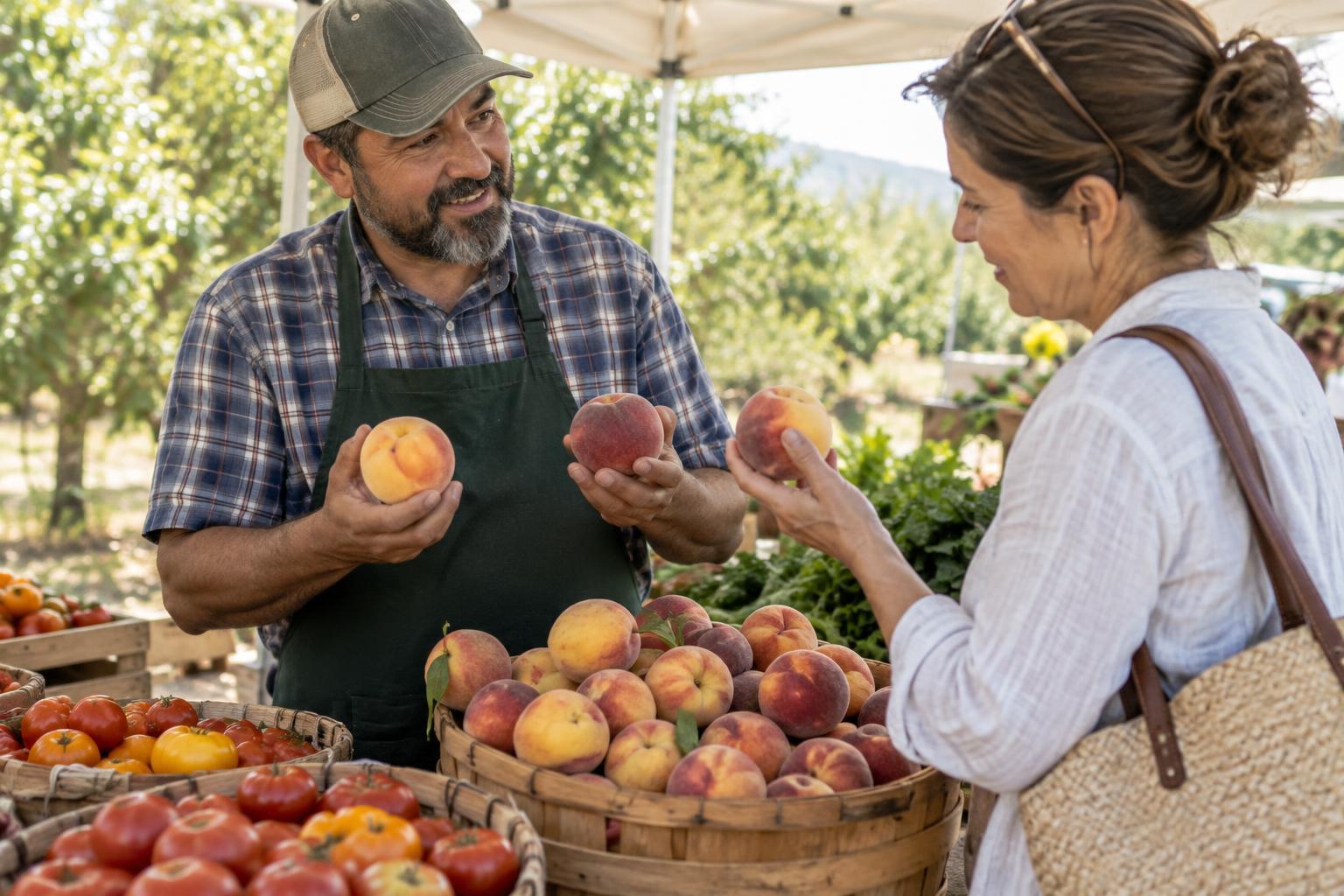
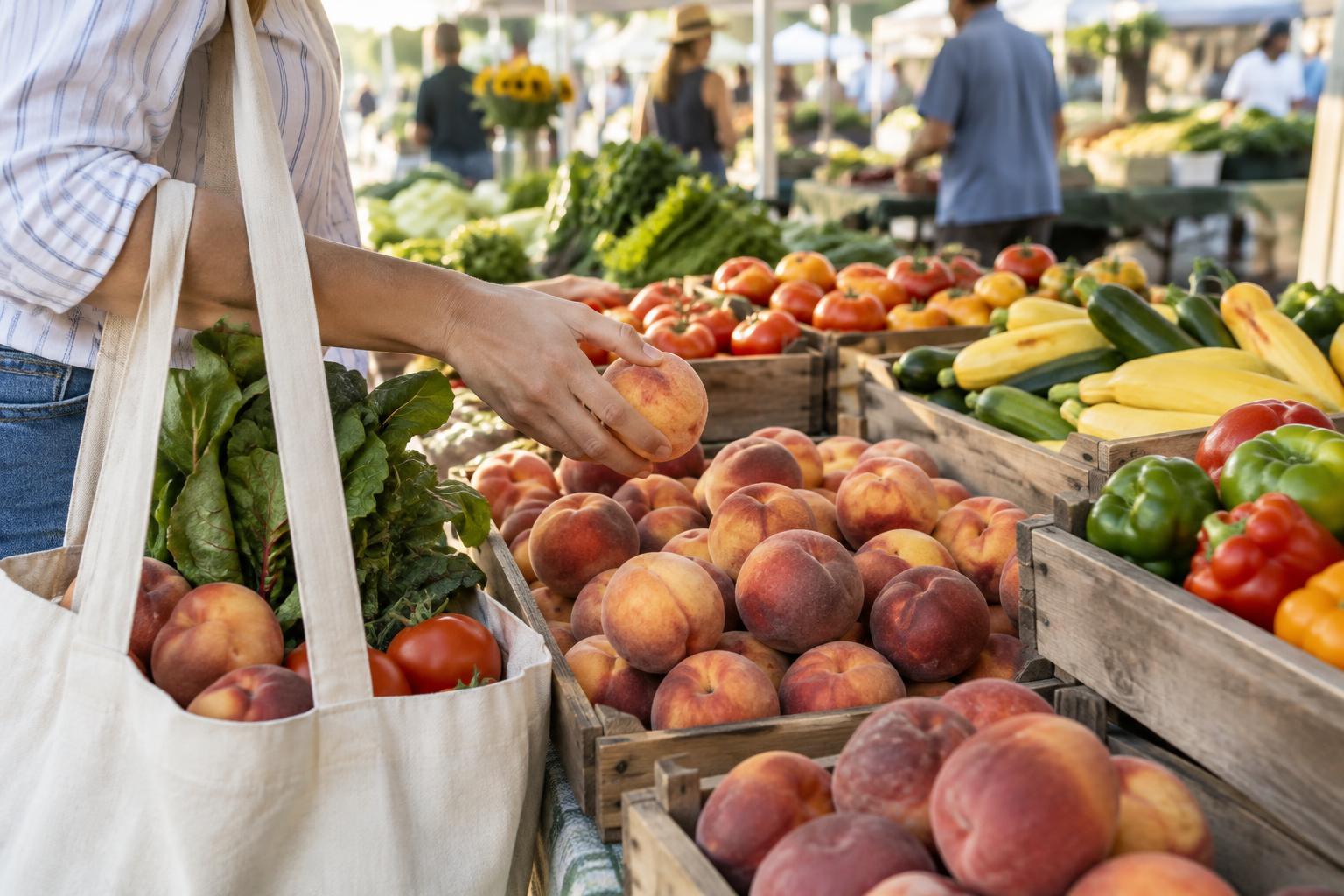
The Central Valley grows a wide range of produce, which makes regional shopping especially rewarding. Still, seeing a familiar crop in a local store does not mean that particular item came from a nearby field. Stores may buy from different suppliers as availability changes, and a seller may carry both local and nonlocal versions of the same fruit or vegetable. Even at a farmers market, it is worth checking who grew an item rather than assuming every stall sells only its own harvest.
Season can help you form a better question. If an item appears when you expect it to be harvested locally, ask whether this batch is local—not whether the crop is grown here in general. Shelf signs and bin labels can offer more detail than a sticker on an individual piece of fruit, but signs can be moved or overlooked. When origin matters to your purchase, connect the sign to the specific bin or package you are choosing.
Ask questions that are easy to answer
You do not need to investigate every tomato. For an item you buy often, or one you especially hope to source locally, a few straightforward questions can help: “Where was this batch grown?” “Is that the grower’s name or the packing company’s?” “Does the origin change during the season?” At a farm stand, you might ask which items the vendor grew and which, if any, came from another farm. These questions leave room for an honest, useful answer.
A worker may not know the exact farm, and that is useful information too. You can ask whether they can check a box, a produce department record, or the person who handles purchasing. If the answer remains broad, treat it as broad. “From California” may be enough for one shopping decision; for another, you may want a named grower or a more specific growing area.
Let the label guide the purchase, not make it for you
Knowing where produce grew can help you choose how to shop, but origin is only one consideration. Ripeness, condition, intended use, price, and what your household will eat all matter. A clear origin label does not guarantee flavor, just as an incomplete label does not mean an item is poor quality. For cooking, you may find that choosing produce at a stage of ripeness suited to tonight’s meal makes the biggest immediate difference.
The most reliable habit is simple: read the words that are there, notice what they leave unanswered, and ask when the missing detail matters. That approach makes room to appreciate the Central Valley’s growers without assuming that every regional-sounding label tells the whole story.