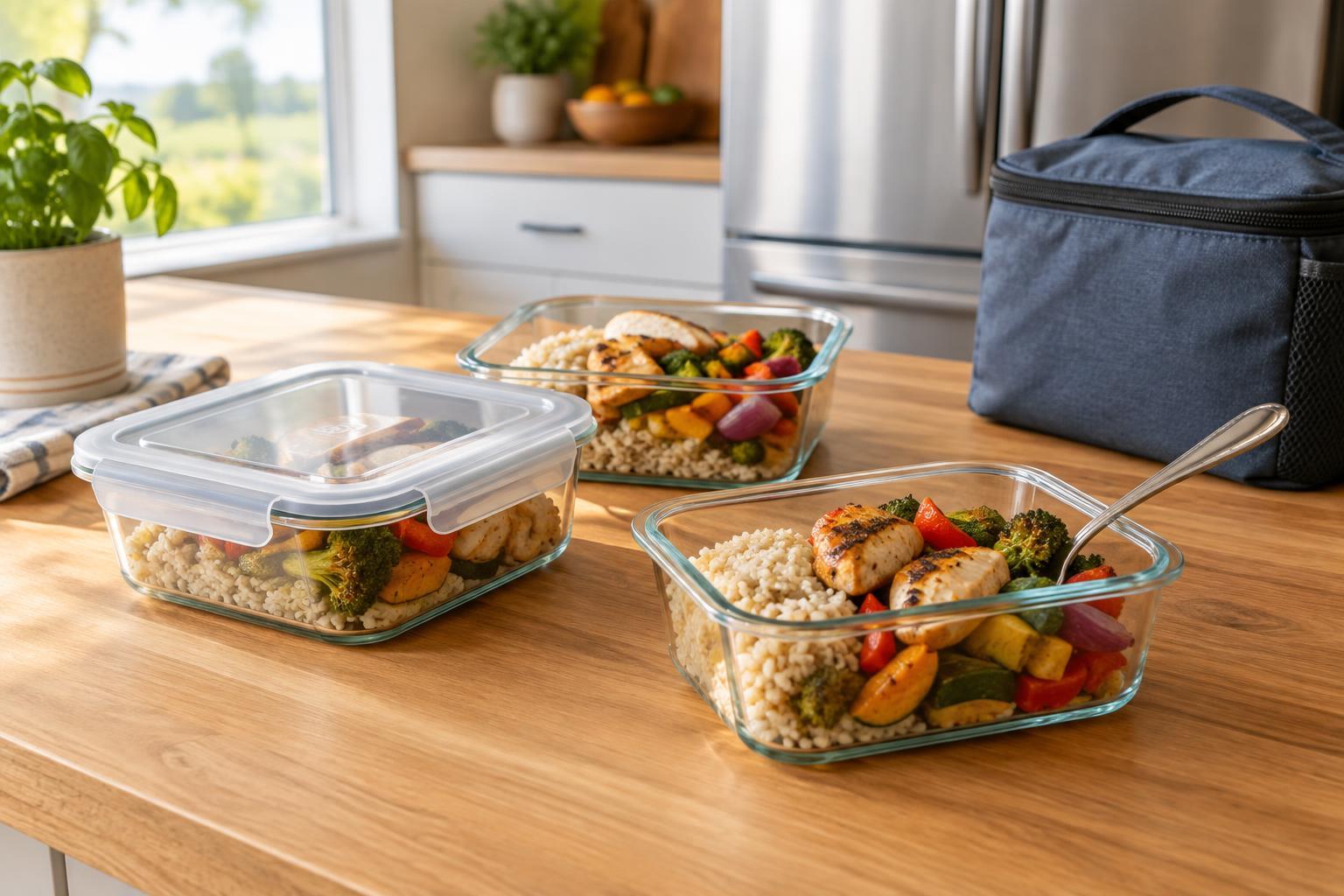
Cool dinner with tomorrow’s lunch in mind
Leftovers are one of the easiest ways to make a weekday lunch feel like a real meal. A portion of roasted vegetables, beans, pasta or chicken can become a grain bowl, wrap or simple plate with little morning effort. The important first step happens after dinner: get the food cooling promptly rather than leaving a pot on the stove for hours.
As a general rule, refrigerate perishable cooked food within two hours, or within one hour if it has been sitting in temperatures above 90°F. Divide large batches into shallow containers so they cool more quickly. You do not need to wait for food to reach room temperature before putting small portions in the refrigerator. Avoid placing a large, tightly covered, steaming pot in the fridge, though; portioning it out is better for cooling and easier on the rest of the food stored there.
Give rice and other cooked grains the same prompt attention. If dinner stretches into a relaxed evening, set aside lunch portions while you clear the table. That small habit makes it less likely that a container will be forgotten on the counter.
Store portions you will actually use
Keep the refrigerator at 40°F or below. Use clean, covered containers and label them with the date if your shelves tend to fill up. Most cooked leftovers are best used within three to four days in the refrigerator. If you know a portion will wait longer, freeze it sooner rather than treating the freezer as a rescue for food that has already spent too long in the fridge.
Separate components when it improves both safety and texture. Keep a crisp slaw away from warm beans, or pack a dressing apart from roasted vegetables until lunch. Store foods that need reheating together when they have similar heating times; a dense serving of lasagna and a handful of tender greens will not respond to the microwave in the same way.
A clean container with a secure lid helps prevent leaks on the commute, but it does not make old food safe. An off smell or visible mold is a clear reason to discard food, while food that looks and smells normal can still have been stored too long. When you cannot remember how long a perishable leftover has been refrigerated, it is safer not to pack it.
Keep lunch cold on the way
A packed lunch still needs temperature control between your kitchen and the office refrigerator. Put it in the fridge when you arrive. If refrigeration is not available, use an insulated bag with enough frozen ice packs to keep perishable food cold until lunchtime. On hot Central Valley days, do not leave lunch in a parked car, even if it started the morning chilled.
Think about how you will eat the meal before packing it. If you have a microwave, a shallow, microwave-safe container makes heating easier. If you do not, choose a lunch that can be kept cold and eaten cold, rather than packing cooked food and letting it drift toward room temperature. A chilled pasta salad, for example, is convenient only when it stays properly chilled.
Reheat until the center is hot
For cooked leftovers meant to be served hot, reheat to 165°F throughout. A food thermometer is the clearest way to check, especially with thick portions. On the stove, stir soups and saucy dishes as they heat. In the oven, give dense casseroles enough time for the center to catch up with the edges.
Microwaves can leave cool spots. Cover food loosely with a microwave-safe lid, stir or rotate it partway through, and let it stand briefly after heating so the temperature evens out. Check the middle of a dense serving rather than judging by a steaming edge. Add a spoonful of water or sauce to rice and grains if they tend to dry out, and keep cold toppings separate until the hot portion is ready.
Build a routine that leaves room for variety
Pack individual portions when you clean up dinner, then leave a note or label for anything you plan to freeze. Smaller portions are easier to chill, carry and reheat, and they let you warm only what you intend to eat. Once lunch is hot, add a fresh element—herbs, sliced cucumber or a squeeze of citrus—to make familiar leftovers feel different without complicating storage.
A useful lunch routine does not require cooking extra every night. It requires a quick decision about what to save, a clear place for it in the fridge, and a plan to keep it cold until you are ready to eat. Those habits make leftovers both more dependable and more appealing by the middle of the week.