Start by showing up
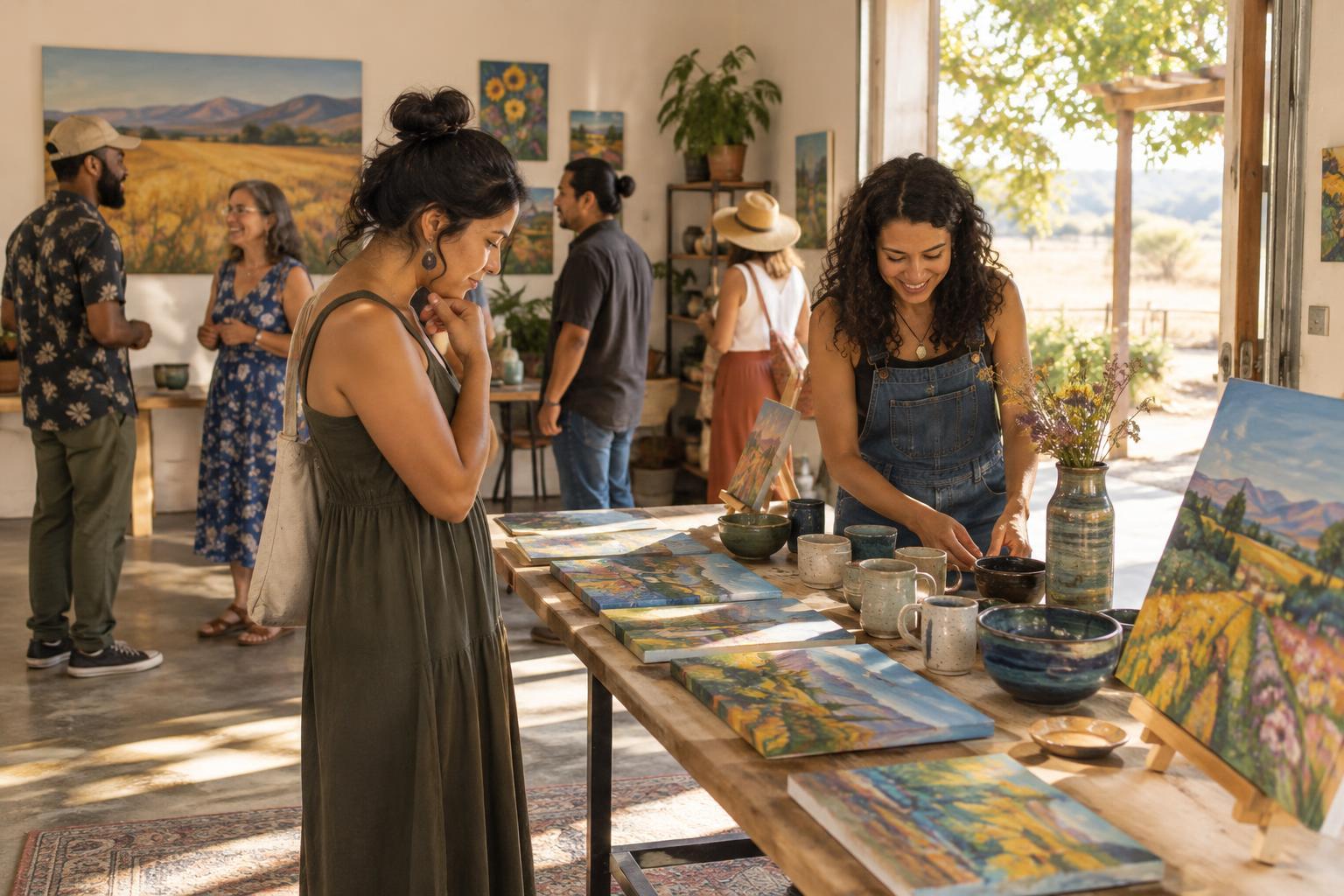
Buying a work is one way to support an artist, but it is not the only way. For someone beginning to exhibit, perform, or teach, a welcoming audience can matter too. Look for open studios, student shows, readings, performances, artist talks, and community exhibitions in your part of the Central Valley. Choose events you genuinely want to attend, and bring a friend who might connect with the work.
Presence is most useful when it comes with attention. Read the exhibition notes, stay for the conversation, and ask a specific question if the artist welcomes one. A brief comment about what caught your eye can be more meaningful than a vague compliment. If a space is crowded or the artist is working, give them room to engage with others. You can appreciate the work without expecting a long, personal conversation.
Share the work with care
A recommendation can help an artist reach people beyond their usual circle. Tell a friend about an upcoming show, include an event in a neighborhood newsletter, or pass a workshop listing to someone who would enjoy it. When posting online, use the artist’s preferred name and link to the page or event details they have provided. A few words about why the work interests you give others a reason to look.
Before photographing or reposting artwork, check the venue’s rules and the artist’s preferences. Credit is important, but credit alone does not replace permission. Avoid cropping out a signature, stripping away context, or using an image to promote your own project without asking. Sharing works best when it points people back to the artist and leaves them in control of how their work is presented.
Connect artists with relevant opportunities
If you know someone organizing a gathering, exhibition, class, or community program, a thoughtful introduction may be useful. Start by checking whether the opportunity suits the artist’s practice. A muralist, ceramicist, poet, and musician may have very different needs. Ask both sides before putting them in touch, and share clear details about the project, timeline, space, and available budget.
Good intentions should not become a request for free labor. If an event needs original artwork, a performance, or teaching, encourage the organizer to plan for compensation and materials. If there is no budget, say so plainly rather than describing the opportunity as valuable exposure. You can also help by pointing an artist toward a call for submissions or a suitable venue, then letting them decide whether to pursue it.
Offer skills, space, or practical help
Support can take the form of a skill you already have. Perhaps you can help proofread a short artist statement, take photographs of an installation, set up chairs for a talk, or lend a hand at a community event. If you have a space that could host a small gathering or display, discuss its limitations honestly before making an offer. Lighting, access, hours, insurance requirements, and the safety of the work all deserve consideration.
Ask what would help rather than assuming. Some artists may welcome assistance with a task; others may prefer to work independently. Agree on the scope and timing, especially if the help requires travel or repeated effort. A modest, reliable offer is often better than an ambitious promise you cannot keep. Volunteering should make a project easier, not create another job for the artist to manage.
Make support a steady habit
Creative communities are built through repeat encounters, not just opening-night excitement. Follow local arts organizations and individual artists to learn about events that fit your schedule. Return to a venue, invite someone new, or leave a constructive note for an organizer about what made an event easy to attend. If you enjoyed a workshop or performance, a specific thank-you can help its organizers understand what resonated.
Keep your expectations simple. An artist does not owe you access to unfinished work, a reply to every message, or an explanation of every choice. Supporting emerging artists means respecting the work as work while making room for it in everyday life. In a region of many communities and creative approaches, curiosity, consistency, and consideration are useful contributions—even when you leave an event empty-handed.