The difference you feel on the water
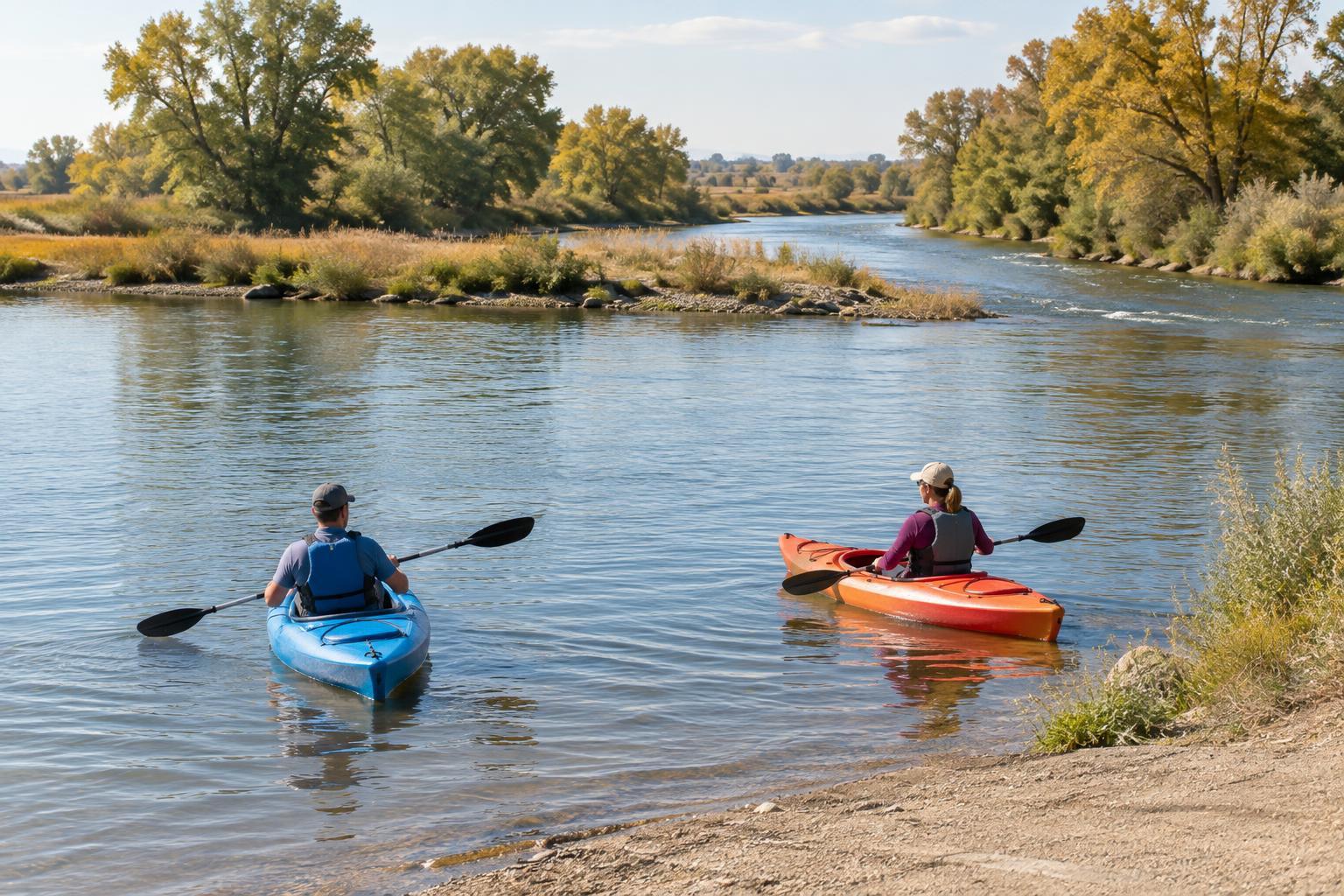
For a first paddle, the biggest difference between a lake and a river is what moves your boat when you stop paddling. On a lake, wind may push you across open water or make the return trip harder than the trip out. On a river, current carries you downstream, even when the surface looks smooth. Neither setting is automatically easier: conditions and the particular stretch of water matter more than the label.
A small, sheltered lake or protected cove can be a comfortable place to learn how a kayak or canoe responds to a paddle. A quiet, slow-moving river can also suit beginners, but it calls for more attention to bends, obstacles and where the trip will end. If you are exploring waterways around California’s Central Valley, choose a specific route only after checking its access rules, conditions and suitability for your group.
On a lake, plan for the trip back
A lake outing often lets you launch and return to the same spot. That makes logistics simple, but it can hide a common beginner mistake: paddling away while conditions are pleasant without leaving enough energy for the return. Notice the direction of the wind before launching, and pick a short route with an easy place to turn around. Staying near shore can make it simpler to reassess your plan, provided you remain clear of hazards and restricted areas.
Open water can become choppy when the wind rises. Boat wakes may add another surprise, especially where motorboats share the water. For a first outing, look for a sheltered launch, a manageable distance and a time when conditions are expected to remain suitable. If the water already looks beyond your comfort level, choosing another day is part of good planning.
On a river, plan for what lies downstream
A river trip usually needs both a put-in and a take-out, plus a way to get people and gear between them. Before launching, know where you will leave the water and whether there are safe, permitted places to stop along the way. A river’s pace can change with flow, and an apparently gentle reach may lead toward faster water, a low-head dam, a diversion or another hazard.
Watch for strainers—branches or other objects that let water pass through but can trap a boat or person. Give fallen trees, bridge supports and irrigation structures plenty of room. Beginners should not assume they can paddle back upstream if they miss a take-out. For a first river experience, consider a guided outing or a clearly described, easy route with an experienced paddler who knows that stretch. Never rely on a route description alone to tell you what the water will be like on the day.
Build skills and pack for either setting
Whichever water you choose, wear a properly fitted life jacket throughout the trip. Learn how to enter and exit the boat, steer, stop and turn before heading far from the launch. A rental operator or introductory class can help you match a boat and paddle to your needs and practice what to do if you end up in the water. Dress for the water as well as the air, since immersion can feel much colder than a warm afternoon suggests.
Bring drinking water, sun protection and a secure way to carry essentials. Keep a phone protected from water, but do not make it your only plan for getting help. Tell someone where you are going and when you expect to return. Check local rules, access information and the day’s weather and water conditions; if anything is unclear, ask a knowledgeable local outfitter or land manager before you launch.
Choose the outing, not just the scenery
For many first-timers, the best choice is the place with the simplest plan: a stable boat, an accessible launch, mild conditions and a route short enough to finish with energy to spare. That might be a sheltered lake paddle or a carefully chosen stretch of slow river. A beautiful view is a bonus, not a substitute for a clear turnaround point or take-out.
Start with a modest goal, such as practicing strokes near the launch before taking a short trip. Pay attention to how your boat handles and how quickly your group moves. You can always add distance on another day. The most satisfying first paddle is one that leaves everyone comfortable, curious and ready to come back.