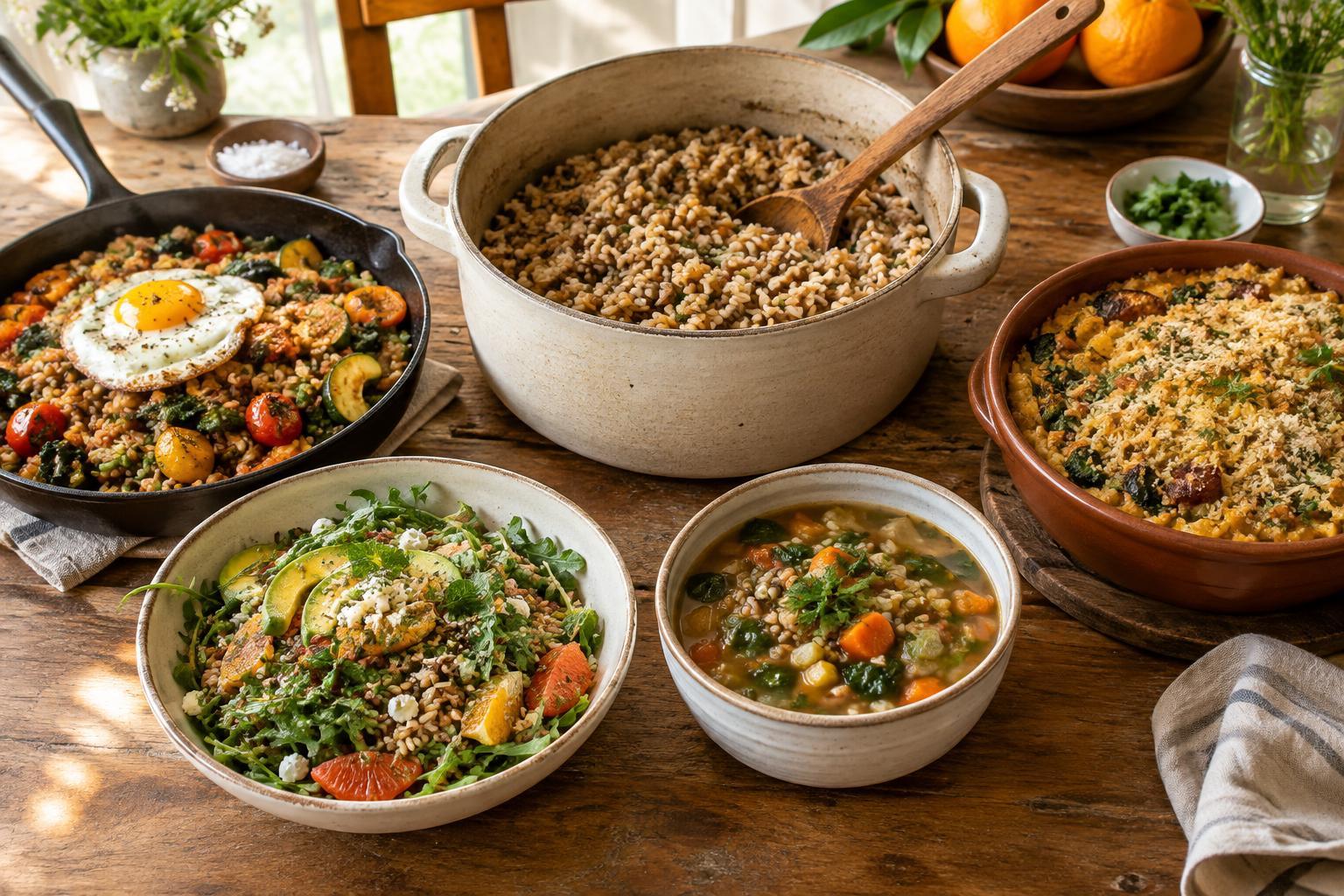
Start with a flexible batch
A pot of cooked grains can make weeknight dinner feel less like a fresh start every evening. Brown rice, white rice, farro, barley and quinoa all work, though each brings a different texture. Rice is especially adaptable; chewy grains such as farro hold their shape well in bowls and soups. Choose a grain your household likes, cook it according to its package directions, and leave it simply seasoned so it can go in several directions.
Once cooked, fluff the grains and spread them out to cool more quickly. Refrigerate them promptly in shallow, covered containers, keeping only what you expect to use in the next few days. Freeze extra portions for a later week. When you’re ready to eat, reheat the portion you need until it is steaming hot. This small bit of planning gives you a convenient starting point without requiring a full meal-prep session.
Make a crisp skillet dinner
Cold cooked grains are useful in a hot skillet because they are less likely to turn soft as you stir them. Warm a little oil, cook chopped onion or another firm vegetable until tender, then add vegetables that need less time. Zucchini, peppers, corn and greens can all find a place here, depending on what is in season or in the refrigerator. Add the grains in an even layer and let them sit briefly before stirring so some edges become golden.
Finish according to your appetite rather than a fixed recipe. For one dinner, add a beaten egg and a splash of soy sauce. For another, use white beans, smoked paprika and a squeeze of lemon. Chopped herbs or sliced scallions make either version taste newly made. If the pan looks dry before everything is hot, add a spoonful of water and cover it for a moment.
Build a bowl with contrast
A grain bowl works best when it offers more than a pile of separate ingredients. Warm the grains, then add something substantial, something crisp and something bright. Chickpeas with roasted carrots and thinly sliced cabbage are one combination. Leftover chicken with chopped cucumber, tomatoes and lettuce is another. Central Valley produce offers plenty of inspiration through the year, but whatever is freshest and easiest to use is the right choice.
The dressing ties the bowl together. Whisk lemon juice or vinegar with olive oil, a pinch of salt and a little mustard; add water if you want it thinner. A spoonful of plain yogurt mixed with lemon and herbs gives a creamier finish. Toss some dressing with the grains before adding toppings, then serve the rest at the table. That way, the base has flavor even if everyone builds a different bowl.
Stretch soup without starting over
Grains can make a quick vegetable soup feel like dinner. Soften onion, celery or carrots in a pot, add broth and any vegetables that need simmering, and cook until they are tender. Stir in cooked grains near the end, along with beans, shredded cooked chicken or a handful of greens. Because the grains are already cooked, they only need time to heat through.
For a tomato-based soup, try barley with white beans and spinach. In a lighter broth, rice with chicken and lemon makes a different meal from the same batch of grains. Add a little more liquid than you think you need: grains can absorb broth as the soup sits. If you expect leftovers, consider storing the grains separately and adding them when reheating each serving.
Use the last portion in a baked meal
When you have a modest amount of grains left, combine them with vegetables and a flavorful binder rather than cooking another full pot. Spoon cooked grains, sautéed vegetables and beans into a baking dish with a little tomato sauce or broth. Top with grated cheese or a few breadcrumbs, then bake until the center is hot and the top has some color. You can also tuck the mixture into halved bell peppers before baking.
The point is not to make every dinner taste like leftovers. Change the cooking method, add a fresh ingredient and give each meal its own finishing touch. A single batch might become a savory skillet on Monday, a crunchy bowl on Tuesday and soup later in the week. That is enough variety to make advance cooking feel helpful rather than repetitive.