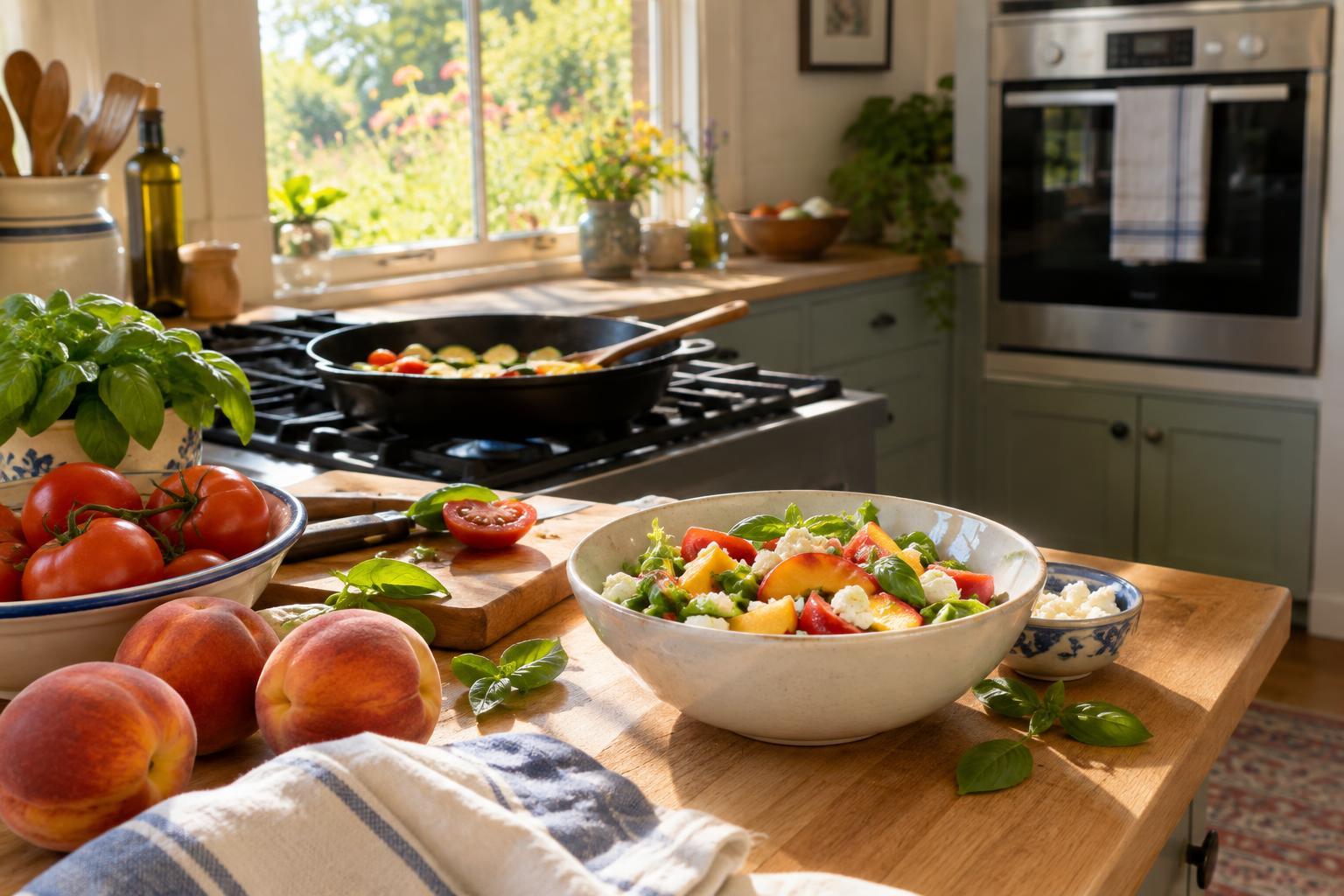
Start with the kitchen, not the recipe
A hot Central Valley afternoon can make a familiar recipe feel less appealing. Before choosing a cooking method, ask how long the meal will take, how much hands-on attention it needs and whether you will be nearby while it cooks. A pan of vegetables that cooks quickly may feel easier than a long roast, even if both make a satisfying dinner. On another day, an oven dish you can prepare ahead may be worth the warmth it adds to the kitchen.
Your home's layout makes a difference, too. A compact kitchen may hold onto warmth, while a kitchen with good ventilation may recover more quickly. An oven usually stays hot beyond the time food spends inside it; a stovetop burner can be turned off as soon as the cooking is done. Neither method is automatically the best summer choice. The useful question is which one gives you the meal you want with a manageable amount of time, attention and kitchen heat.
Choose the stovetop for quick, flexible meals
The stovetop shines when ingredients need only a short cook. Sauté summer squash with garlic, simmer a quick tomato sauce or warm beans with spices and a splash of water. A covered skillet can also help vegetables soften without leaving the burner on longer than necessary. If you are cooking a grain or pasta, make a little extra and refrigerate the leftovers promptly so tomorrow's meal can come together with less cooking.
Stovetop cooking does not always mean a cooler kitchen. A large pot boiling uncovered or a sauce simmering for hours can release plenty of warmth and steam. Use a lid when the recipe allows, match the pan to the amount of food and turn down the heat once a gentle simmer will do. For a complete meal, think in layers: a quickly cooked base, something fresh and a flavorful finishing touch. Warm chickpeas over chopped tomatoes with herbs and a spoonful of yogurt, for example, need far less active cooking than a multi-pan dinner.
Save the oven for food that benefits from it
There are good reasons to use the oven in summer. It can cook several portions at once, brown vegetables and handle a dish that needs steady, even heat. If roasted peppers, baked chicken or a tray of vegetables will anchor more than one meal, a single oven session may be more convenient than cooking each dinner separately. The value is not just in tonight's plate but in what you can use later for sandwiches, grain bowls or a room-temperature salad.
When you do bake or roast, consider timing and scale. Early morning or evening cooking may be more comfortable than heating the oven during the hottest part of your day. Put dishes that require the same temperature in together if they fit safely without crowding, and avoid opening the oven door repeatedly to check progress. Let cooked food cool as appropriate, then store perishable leftovers in the refrigerator rather than leaving them out through a warm evening. An oven meal works best when it earns its place in the day's routine.
Let seasonal ingredients do some of the work
Summer produce can make the cooking decision simpler. Ripe tomatoes, cucumbers, stone fruit and fresh herbs bring flavor and texture without needing to be roasted or simmered. Slice tomatoes onto toast with a little olive oil, fold chopped fruit into a grain salad, or pair crisp vegetables with a dip and bread. These are not lesser meals because they skip the oven; a mix of filling ingredients and bright produce can be exactly what a warm day calls for.
A useful middle ground is to cook just one component. Boil eggs in the morning for an evening salad, warm tortillas while assembling cool fillings, or sear a protein and serve it alongside raw vegetables. You can also borrow from yesterday's cooking: leftover roasted vegetables become a sandwich filling, while cooked rice can support a bowl of chopped produce and dressing. Planning around what is already in the refrigerator often saves more effort than finding a completely new recipe.
Build a small summer cooking routine
Rather than making an oven-versus-stovetop rule for the entire season, keep a few options for different kinds of days. Have a quick skillet meal for evenings when you want something warm, an oven meal that makes useful leftovers, and a no-cook meal for days when turning on any heat sounds uninviting. Stocking flexible basics such as beans, grains, bread, eggs and your preferred dressings makes those choices easier.
The best summer method is the one that fits your kitchen and your appetite. If the oven will provide several easy meals, use it deliberately. If a short turn at the stove gets dinner on the table, stop there. And when good ingredients need little more than slicing and seasoning, let them be the meal. Hot-weather cooking can be less about avoiding heat altogether and more about using it where it counts.