Start with the meal, not a menu
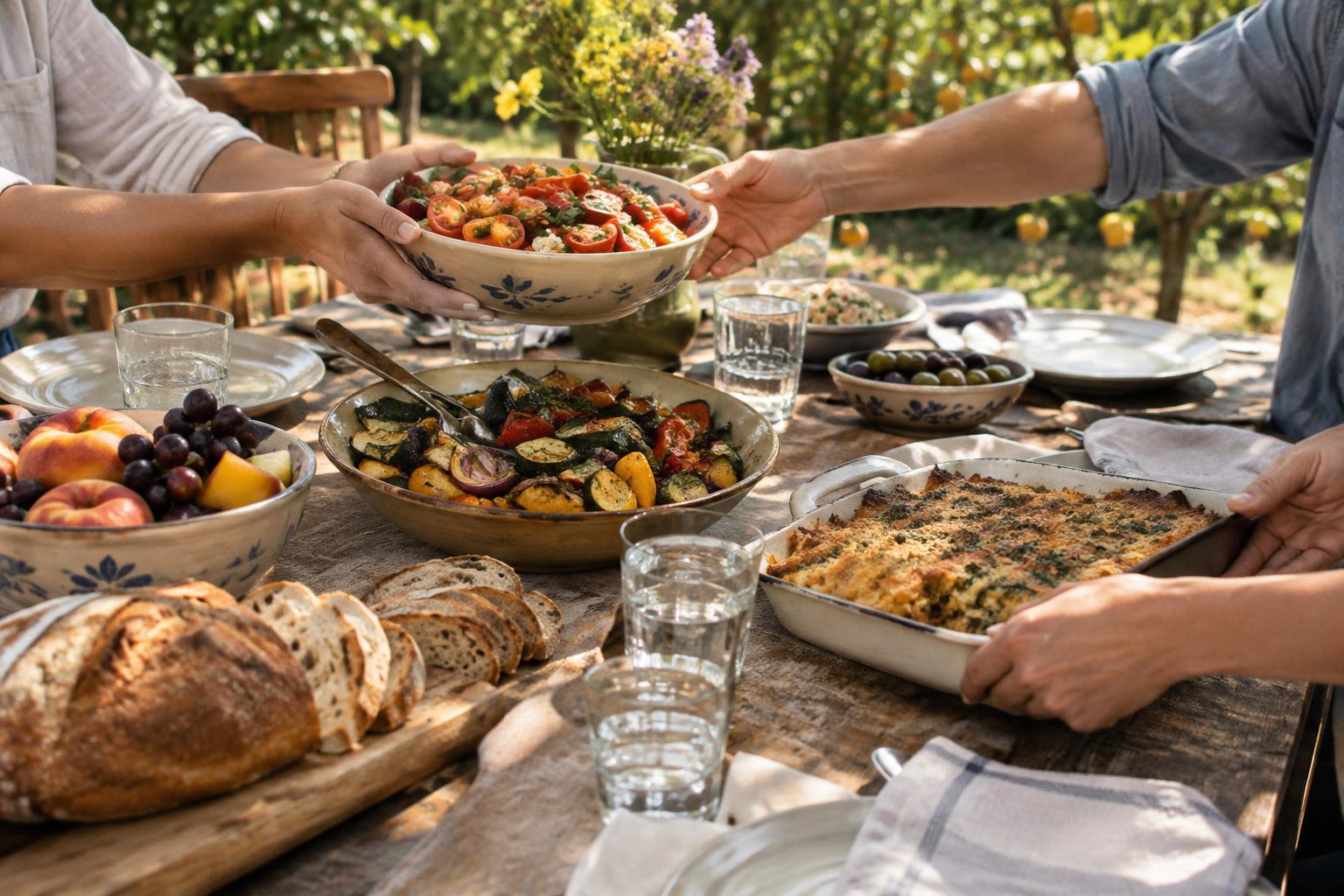
The easiest potlucks give guests a clear idea of the gathering without asking everyone to follow a detailed plan. Tell them whether you’re imagining lunch in the backyard, a casual dinner, or an afternoon of snacks. Include the approximate guest count and whether people will be eating at a table or balancing plates on their laps. Those details help someone decide between a tray of roasted vegetables and a delicate dish that needs last-minute attention.
Next, sketch a few broad categories: a filling main or two, vegetables or salad, something starchy, and dessert. You do not need to assign every item. A Central Valley-inspired table might include tomatoes, stone fruit, herbs, beans, or other ingredients guests enjoy and can find, but the point is to welcome good food rather than prescribe a regional menu. Leave space for a guest’s familiar favorite; potlucks are often better when people bring what they make comfortably.
Offer a choice instead of issuing assignments
When inviting guests, ask what they would like to bring and give them two or three useful options. You might say, “A salad, a side, or a dessert would all fit well—what sounds good to you?” This gives the table some shape while letting guests work within their time, budget, and kitchen setup. If someone prefers to bring bread, fruit, or a store-bought item, that contribution still counts.
Keep a short private list of what people volunteer to bring. It only needs a name and a dish or category. If three people choose dessert, there is no need to redraw the whole plan; you can ask the next volunteer for something savory. If a guest is uncertain, suggest an easy gap to fill. The goal is a reasonably varied meal, not perfectly equal portions of every food group.
Cover the essentials as the host
A host can make the gathering feel settled by taking responsibility for a few basics. Provide water, plates, utensils, napkins, and a place to set down food. Decide whether you’ll supply the main dish, a hearty side, or a generous snack that guests can eat while other dishes arrive. Having one dependable item means the meal can begin even if traffic, errands, or oven timing delay a contribution.
Think about serving space before the doorbell rings. Clear a counter or table, set out a few serving spoons, and make room for dishes that should stay chilled or warm. Ask guests to bring a serving utensil if their dish needs a special one, and let them know if kitchen space will be limited. These small details prevent a crowd from gathering around a single drawer while the food waits.
Ask about needs without turning dinner into a form
A brief check-in about dietary needs is more useful than trying to guess them. Ask guests to tell you about any restrictions that would make it hard for them to enjoy the meal, then share relevant information with the group as needed. You can also invite people to label dishes with their names and key ingredients. Simple labels help guests choose for themselves without requiring the cook to stand beside the table answering the same question all evening.
It is worth being clear about transport, too. A dish that needs careful refrigeration or reheating may be awkward for a picnic or a home with a busy oven. Let guests know what facilities are available, and encourage dishes that travel well if the setup is simple. If you are gathering outdoors, a cooler and some shade can help, but food that needs temperature control should not be left sitting out for the whole party.
Let the table be a little uneven
Even with thoughtful planning, a potluck might have extra bread, several salads, or no elaborate dessert. That is usually part of its charm. Rather than correcting every overlap, look for easy ways to make the spread work: put fruit near the sweets, offer bread alongside salads, and bring out your backup snack if the savory dishes are light. Guests are gathering to eat together, not to inspect a menu.
Once everyone has arrived, give the food a simple flow. Point out where drinks and plates are, mention anything that needs to be eaten first, and encourage guests to start. At the end, ask people to take their containers home and offer leftovers when appropriate. Good potluck hosting is less about managing every dish than making it easy for people to contribute, settle in, and share a meal.