Start with the result you want
A bag of carrots, a bunch of greens or a few summer squash can go in several directions. Before reaching for a pan, decide what the vegetables need to do in the meal. Do you want browned edges beside a simple main dish, gentle tenderness for a grain bowl, or a quick addition to a weeknight dinner? Roasting, steaming and sautéing can all work well, but each emphasizes a different quality.
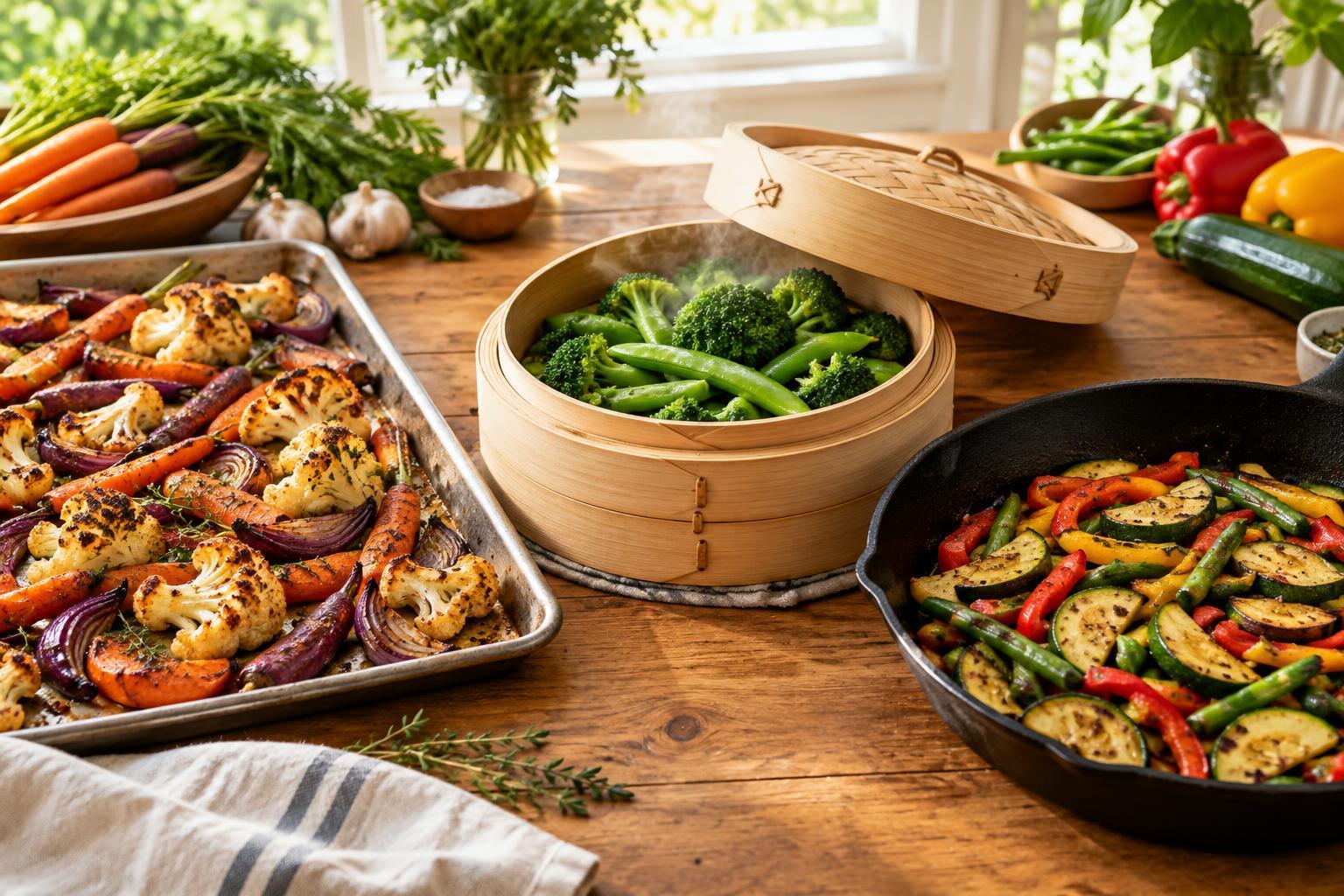
Roasting uses dry oven heat to encourage browning and concentrate flavor. Steaming uses moist heat to soften vegetables without adding much flavor of its own. Sautéing cooks vegetables in a little fat over direct heat, making it useful when you want to build flavor quickly. The best choice depends less on a strict rule for each vegetable than on its size, moisture content and the texture you enjoy.
Roast when you want sweetness and browned edges
Roasting is a good choice for sturdy vegetables such as carrots, cauliflower, broccoli and winter squash. The oven gives their surfaces time to dry and brown while the interiors become tender. It also suits vegetables you would rather leave alone while preparing the rest of dinner.
Cut pieces to a similar size, dry them if they are wet, and toss them with a light coating of oil and seasoning. Spread them on a pan with room between pieces. Crowding traps steam, so a full pan may produce soft vegetables rather than browned ones. Turn the pieces partway through if you want more even color, and check them with a fork rather than relying only on a timer.
Roasting is less convenient when you need just a handful of vegetables in a hurry. It can also make delicate leaves or very thin pieces dry out before they develop the texture you want. If the oven is already on for another dish, though, a tray of seasonal vegetables is an easy way to make good use of it.
Steam when tenderness and a clean flavor matter
Steaming is useful when you want vegetables to taste primarily like themselves. It works especially well for green beans, broccoli, asparagus and other vegetables you plan to finish with a sauce, dressing or flavored oil. Because the vegetables sit above simmering water rather than in it, you can check their texture and remove them as soon as they are ready.
Aim for tender enough to enjoy, not automatically soft throughout. Cut thick stems or dense pieces smaller so they finish at about the same time as more delicate parts. If you are steaming different vegetables for one meal, add the firmest pieces first or cook them in separate batches. A lid helps hold in the steam; lifting it occasionally to test a piece is better than guessing.
Steamed vegetables welcome finishing touches. Try olive oil and lemon, butter and herbs, or a spoonful of yogurt-based sauce. Season after cooking and taste before serving. If the vegetables are going into a salad or will be reheated later, stop cooking while they still have a little firmness.
Sauté when dinner needs to move quickly
Sautéing is well suited to smaller cuts and vegetables that cook relatively fast, including sliced zucchini, mushrooms, peppers and tender greens. A skillet lets you adjust the heat as you go, add aromatics and combine several ingredients in one pan. It is a practical choice when you want vegetables ready near the end of a meal.
Preheat the pan, add a modest amount of oil, then add vegetables in a layer that leaves room for moisture to escape. Stir enough to prevent burning, but let pieces sit briefly if you want some browning. Mushrooms and watery vegetables may release liquid at first; giving them space and time can help that liquid cook away. Add garlic and delicate herbs toward the end so they do not scorch.
For mixed vegetables, think about cooking speed. Start firm pieces first, then add quick-cooking vegetables and greens later. If the pan looks dry before dense pieces are tender, a small splash of water and a brief cover can help them soften. Remove the lid afterward if you want the remaining moisture to evaporate.
Let the meal make the final decision
The same vegetable can earn a place in more than one method. Broccoli can be roasted for crisp, browned tips, steamed for a tender side dish, or sautéed in small pieces with garlic. Carrots can be roasted as a substantial side, steamed before being dressed with herbs, or sliced thinly for a skillet. Choose based on the time you have and what else is on the plate.
When a meal already has rich or deeply browned flavors, gently steamed vegetables can bring contrast. If dinner is built around grains or beans, roasted vegetables can add texture. For a quick lunch, sautéed vegetables can go straight into eggs, noodles or a warm sandwich. Keeping a few simple finishing options on hand—citrus, herbs, toasted nuts or a favorite sauce—makes any of the three methods feel complete.