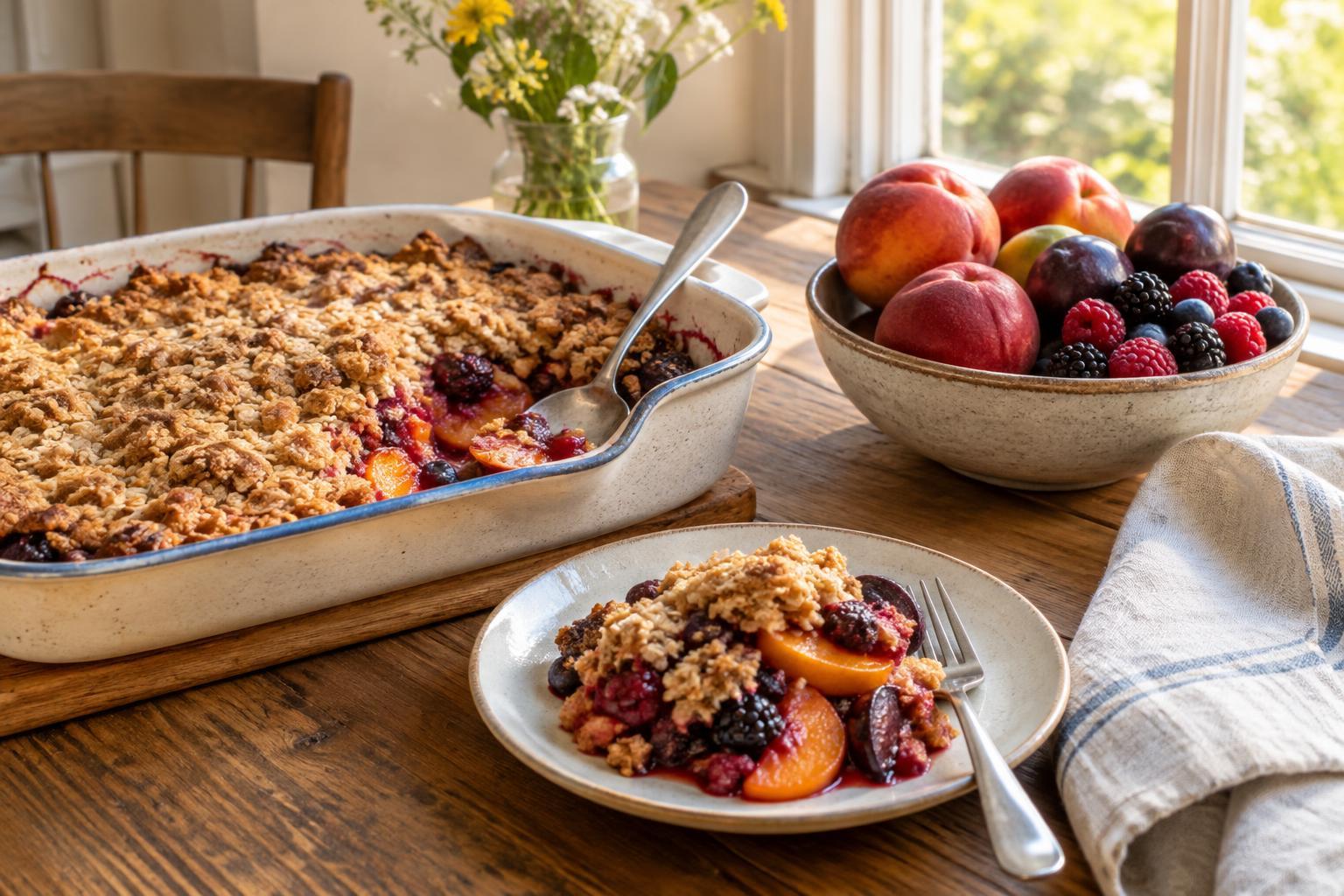
Start with the fruit in front of you
A bowl of ripe summer fruit is already close to dessert. Peaches and nectarines bring fragrance, plums add a pleasant tart edge, and berries can fill the gaps between larger pieces. You do not need a matching set of fruit or a complicated recipe. Begin by tasting a piece: its sweetness, acidity and texture will tell you what it needs.
Use tender fruit that is still pleasant to eat for fresh desserts. If it is soft but sound, cooking can give it a new shape as a sauce or filling. Discard fruit with mold or an unpleasant smell rather than trying to rescue it with sugar or heat. Wash fruit, remove pits and trim bruised spots before you begin. Peeling is optional; skins add color and make preparation quicker.
Hold back on sweetener until you have tasted the fruit. A little lemon juice can brighten very sweet fruit, while a spoonful of sugar or honey can soften a sharp batch. The goal is to bring out what is there, not cover it up.
Keep the easiest desserts fresh
For a quick finish to a home-cooked meal, slice ripe fruit and let it stand for a few minutes with a small spoonful of sugar. The juices will gather in the bowl and become a light sauce. Add a squeeze of citrus if the fruit tastes flat, or a few torn mint leaves if you want an herbal note. Spoon everything over plain yogurt, softly whipped cream or a scoop of vanilla ice cream.
Toast can become dessert, too. Spread thick slices with ricotta or yogurt, pile on chopped peaches or berries, and add a drizzle of honey just before serving. For a version that needs no assembly at the table, layer fruit and cream in small glasses. Keep crunchy toppings, such as toasted nuts or crushed cookies, separate until the last moment so they stay crisp.
Fresh desserts are especially useful when the fruit is juicy and flavorful but too delicate to survive baking. They also make it easy to use small amounts of several fruits without worrying about whether they will cook at the same rate.
Turn soft fruit into a quick stovetop sauce
When fruit is too soft for tidy slices, make a loose sauce. Cut it into even pieces and put it in a saucepan with a splash of water. Warm it over medium heat, stirring occasionally, until the fruit releases its juices and begins to break down. Taste before adding sweetener. A little lemon juice can keep the finished sauce lively; a pinch of cinnamon or a strip of citrus zest can add warmth without taking over.
Leave the sauce chunky for spooning over ice cream, pancakes or a simple pound cake. Cook it a little longer for a thicker topping, stirring more often as the liquid reduces. If you are combining fruit, add firmer pieces first and delicate berries near the end. That gives the berries a chance to soften without disappearing completely.
Let a hot sauce cool before covering and refrigerating it. Making the topping ahead leaves very little to do when guests arrive: set out the sauce, a bowl of something creamy and a few spoons.
Bake a forgiving fruit crisp
A crisp is a useful choice when you have a generous amount of fruit and want a warm dessert. Put chopped fruit in a baking dish and toss it with a little sugar and lemon juice. If the fruit is especially juicy, add a small spoonful of cornstarch so the juices thicken as they bake. Scatter a topping of oats, flour, brown sugar and cold butter over the fruit. Rub the mixture together with your fingers until it forms uneven crumbs; those different-sized pieces bake into a pleasing texture.
Bake until the topping is browned and the fruit juices bubble near the center. If the top colors too quickly, loosely cover it while the filling finishes cooking. Give the crisp time to rest before serving so its juices settle. A mix of peaches and plums works well, as does a handful of berries tucked among sliced nectarines. Precise arrangement is unnecessary: this is a dessert that should look generous rather than polished.
Make room for an easy ending
A good fruit dessert can fit the pace of a relaxed Central Valley-inspired table. Choose a fresh bowl of fruit when the day is warm and the meal is substantial. Choose a crisp when the oven is already on, or a stovetop sauce when you would rather prepare dessert ahead. In each case, let the fruit do most of the work and use creaminess or crunch for contrast.
If you have more ripe fruit than you can use at once, portion and freeze sound, washed pieces for a later sauce or crisp. They may lose their firm texture when thawed, so save fresh, sliceable desserts for fruit you can serve now. Summer fruit does not need an elaborate plan; noticing its texture and tasting as you go are enough to guide the next simple dessert.