Start with the rice you have
Rice is an easy foundation for a home-cooked meal, whether you serve it beside roasted vegetables, spoon beans over it or turn leftovers into fried rice. The key is to match the water and cooking time to the type of rice. A ratio that works for one variety may leave another too firm or too soft.
For the methods below, use a saucepan with a well-fitting lid and measure the rice and water with the same cup. Package directions are a useful starting point, especially for specialty rice: some varieties are milled or processed differently and need their own timing. If you rinse rice, drain it well so the water clinging to the grains does not substantially change your ratio. Rinsing can remove loose surface starch, but check the package first if you want to preserve added nutrients in enriched rice.
A dependable method for white rice
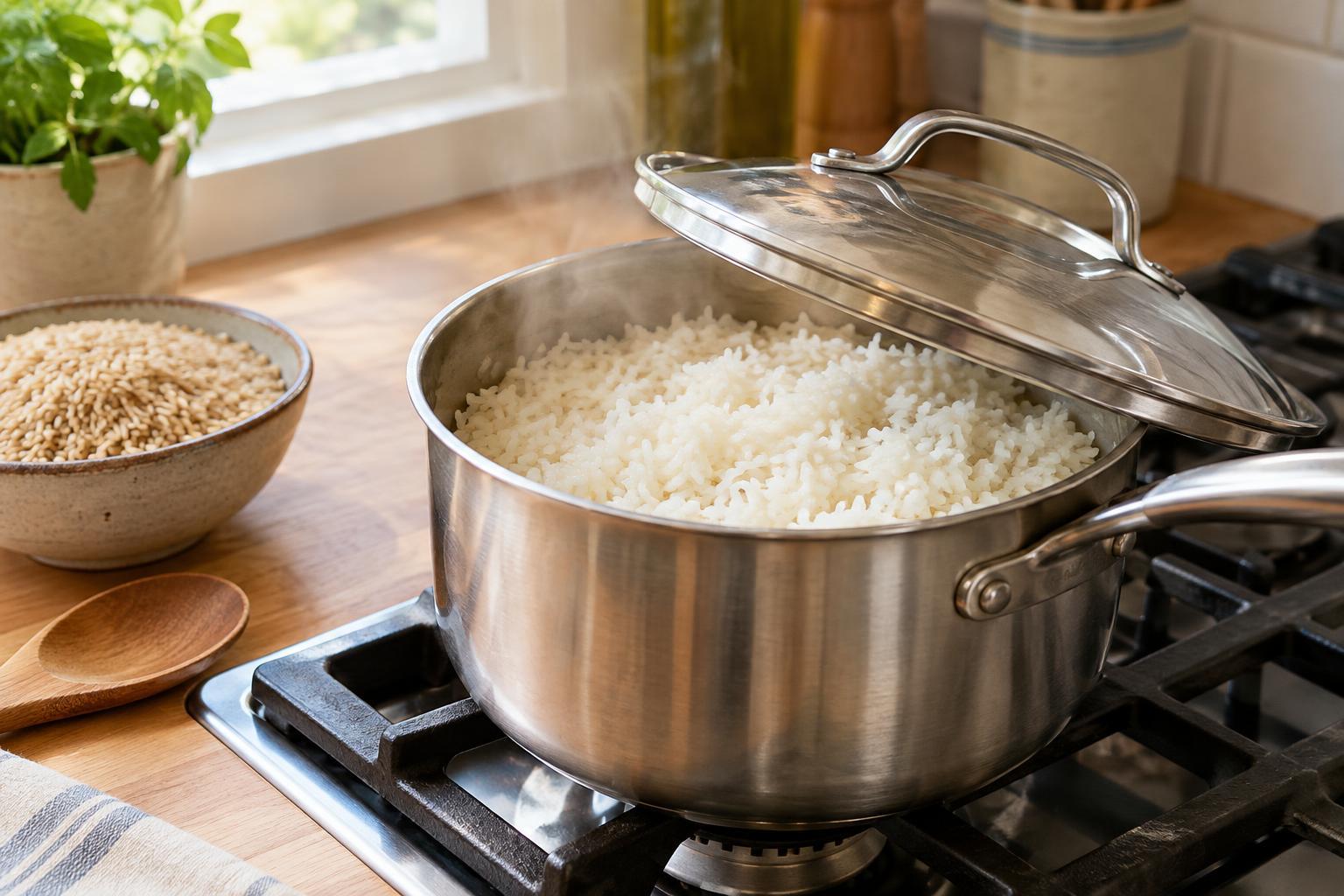
For a starting point with regular long-grain white rice, use 1 cup rice and 1½ cups water. Add a pinch of salt if you like. Bring the water and rice to a boil in a covered or uncovered saucepan, stir once to loosen any grains on the bottom, then cover and turn the heat to its lowest setting. The goal is a quiet simmer, not vigorous bubbling that pushes liquid out from under the lid.
Cook for about 15 to 18 minutes without repeatedly lifting the lid. When the water has been absorbed, turn off the heat and leave the pan covered for 10 minutes. This rest lets moisture settle through the rice and makes it easier to fluff with a fork. If your stove runs hot, move the pan off the burner during the rest.
For short- or medium-grain white rice, start with the package directions rather than assuming the long-grain ratio will fit. These grains often cook up softer and cling together more readily. Whatever variety you use, keep notes on the ratio and timing that work in your saucepan; a small adjustment can make the next pot more consistent.
Give brown rice more water and time
Brown rice retains its outer bran layer, so it generally needs a longer simmer than white rice. For regular long-grain brown rice, try 1 cup rice to 2 cups water. Bring it to a boil, cover, reduce the heat to low and cook for roughly 40 to 45 minutes. Let it rest, covered and off the heat, for another 10 minutes before fluffing.
Check the package for quick-cooking or other specially processed brown rice, which may need much less time. When testing a new variety, taste a few grains near the end of cooking. Tender rice should have a pleasant chew without a hard center. If it is still firm and the pan is dry, add a small splash of hot water, cover and cook a little longer.
Fix the texture without starting over
If the rice is firm and you can see no water in the pan, add a tablespoon or two of hot water, cover and continue cooking on low for a few minutes. Repeat only as needed, then allow a covered rest. If the grains are tender but the pan looks wet, leave the lid off over low heat briefly to let excess moisture escape. Avoid stirring vigorously, which can break softened grains.
Mushy rice usually means too much water, too much cooking time or a lid that stayed on after the rice was ready. You cannot make the grains firm again, but you can spread the rice on a plate or shallow dish to release steam and serve it with a saucy dish. Next time, reduce the water slightly or check the rice a few minutes earlier.
A scorched bottom often points to heat that was too high or a thin pan that heats unevenly. Turn off the burner as soon as you smell browning, and scoop the unscorched rice into another bowl without scraping the bottom. On your next attempt, use the smallest burner that suits the pan and lower the heat as soon as the water boils.
Make the next pot easier
Consistent rice is less about finding one universal ratio than repeating a method that suits your rice, pot and stove. Measure carefully, use a tight lid, keep the simmer gentle and allow the covered rest before judging the texture. Change only one thing at a time when adjusting your method, such as reducing the water by a tablespoon or extending the simmer by a couple of minutes.
Once you find a combination you like, jot it down on the rice container. That small kitchen note turns a basic side dish into a dependable part of weeknight cooking and leaves you free to focus on what goes with it.