Start by noticing how things are made
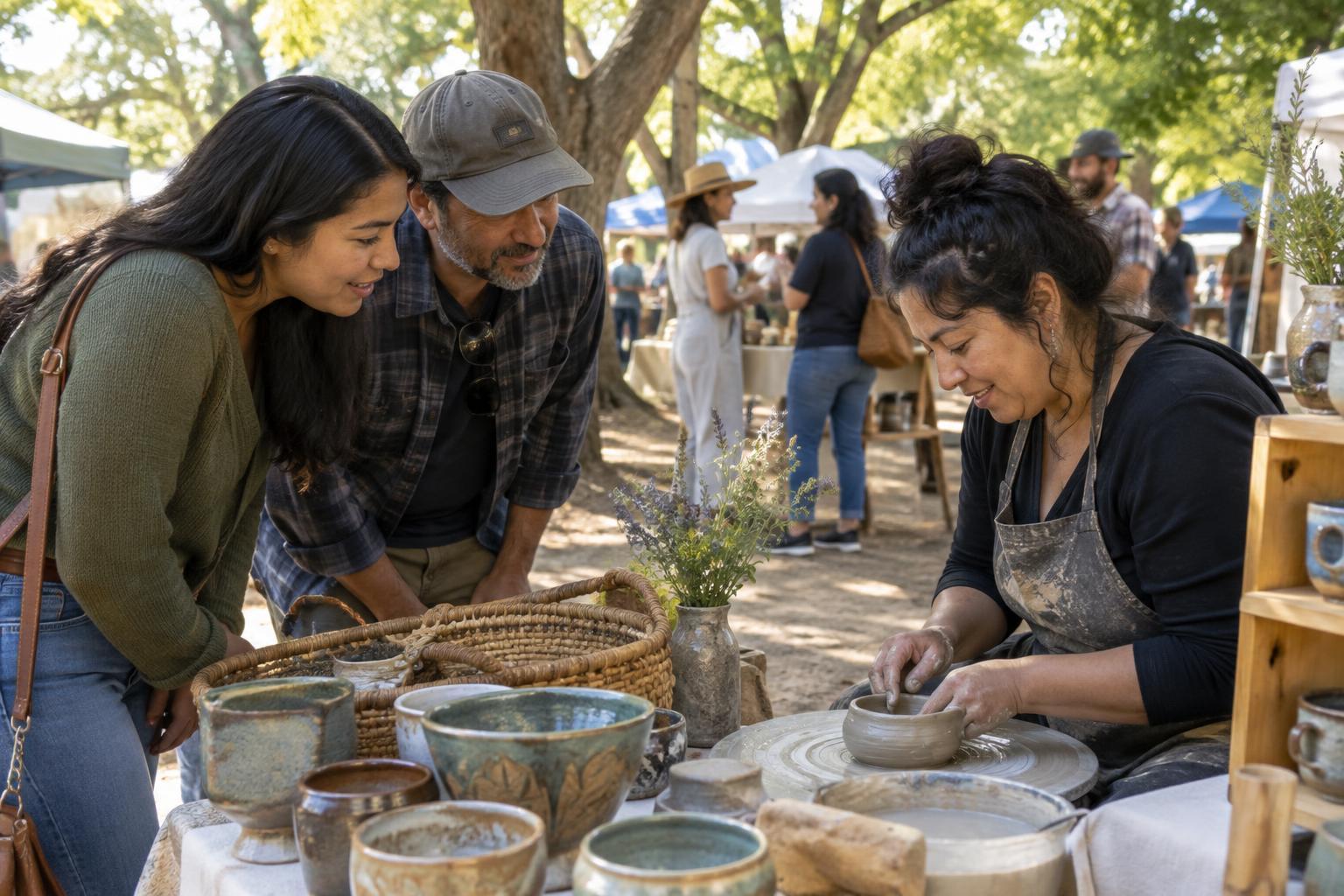
At a community craft fair, it is easy to scan a table for colors and prices, then move on. Try looking a little longer. A woven basket may reveal the rhythm of its construction; a ceramic bowl may show small variations in its glaze. Those details can make a familiar object feel new, even when you have no intention of taking it home.
If a maker is available to chat, a simple question can open a useful conversation: What part of the process takes the most patience? How do you choose materials? What would you like someone to notice about this piece? Not every booth is set up for a long discussion, so read the moment and keep questions brief when others are waiting. If there is a demonstration, give yourself time to watch rather than treating it as a preview of something to purchase.
Look for the choices behind the finished work
A fair can bring many approaches together in one walkable space. Two artists might work in the same medium yet make very different decisions about shape, texture or use. As you wander, look for recurring ideas: practical objects made beautiful, traditional techniques given a personal twist, or discarded materials turned into something useful. You do not need specialized vocabulary to appreciate the thought behind those choices.
In a place like California’s Central Valley, it can be especially interesting to notice work that reflects everyday life in the region. A piece might call to mind a garden, a family table or a stretch of open landscape. It is worth asking a maker about an apparent connection rather than assuming what their work means. The answer may be more personal, or entirely different, from your first impression.
Treat conversation as part of the experience
Craft fairs offer a chance to meet people outside your usual routine. A short exchange with a maker, volunteer or fellow visitor can tell you why someone enjoys a particular technique or what drew them to the event. These conversations need not become interviews. A sincere observation and a question are often enough to make the visit feel more connected to the people around you.
It also helps to be considerate of the work involved in hosting a booth. Ask before touching delicate items, and request permission before photographing a person or their work. If a maker is busy helping a customer, you can take a card or note their name if one is available. Respectful attention is a meaningful way to participate, whether your budget allows for a purchase or not.
Notice the community around the booths
The fair itself is often a collaborative effort. Alongside the makers, there may be organizers, volunteers, performers or neighbors helping visitors find their way. Notice how the space invites people to spend time together. Is there a place to sit and talk? Are families comparing what caught their eye? Are visitors lingering over a demonstration? These small scenes can tell you as much about the gathering as the objects on display.
If an event includes activities or shared spaces, consider joining in rather than rushing through every aisle. You might try a hands-on project, listen to someone explain a skill or simply pause where people are gathering. Options vary from fair to fair, and not every activity will be free or open to all ages. Checking signs and asking a volunteer can help you find a comfortable way to take part.
Leave with an idea, even if you leave empty-handed
A good visit does not depend on buying something. You might leave with a new appreciation for mending, a color combination to try at home or a better sense of how much care goes into a handmade object. If a technique sparks your curiosity, jot down its name so you can explore it later. That turns a pleasant afternoon into a starting point for your own creativity.
Before you go, take one more unhurried look around. Think about which conversation or detail stayed with you and why. Supporting a creative community can begin with showing up, listening and treating people’s work with care. A purchase is one possible part of that relationship, but the fair offers plenty to notice beyond the shopping.