Let the walk set the pace
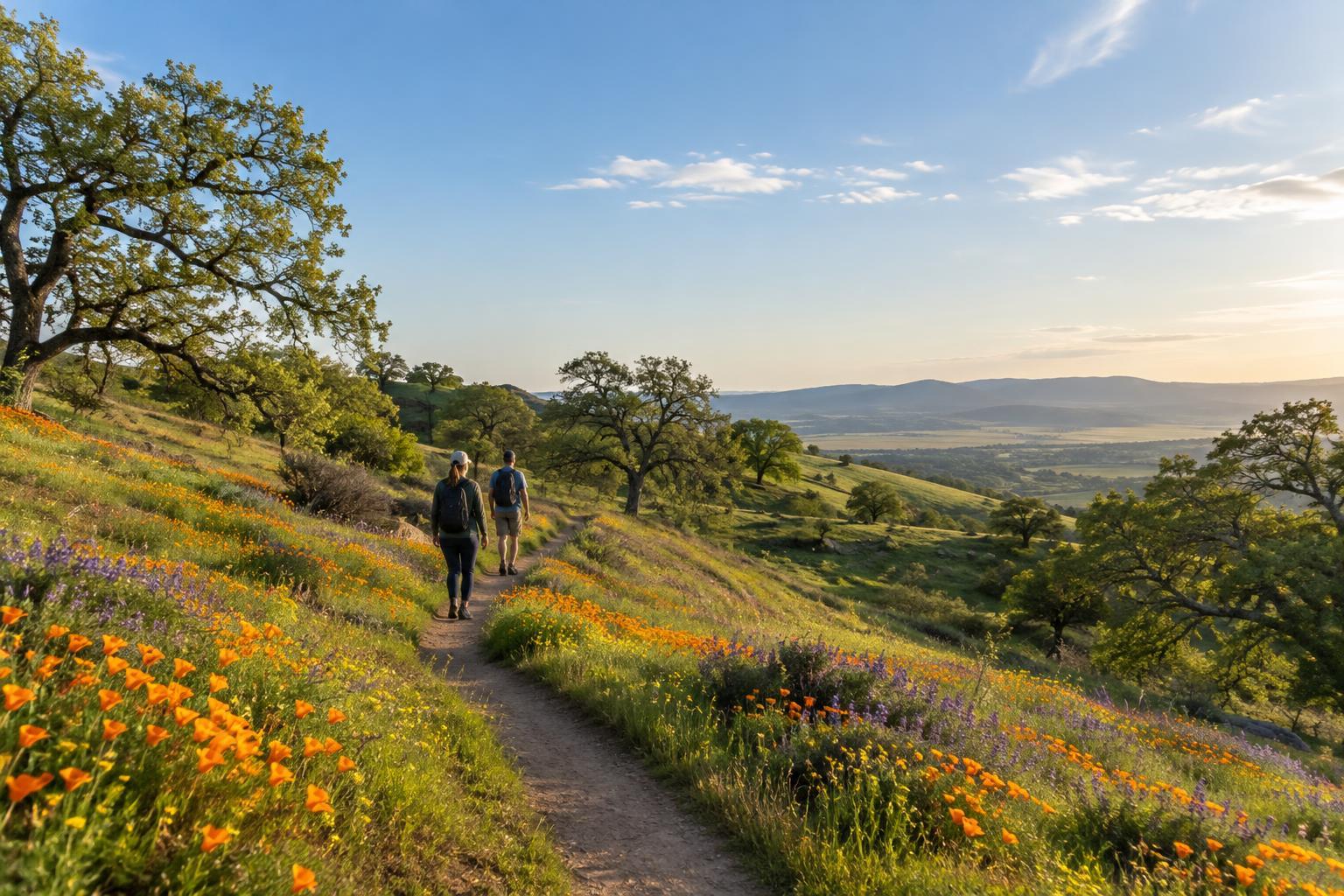
California’s Central Valley foothills invite a different kind of outing from a hike measured by distance. A short stretch of trail can offer changing textures: open grass, scattered oak shade, rocky ground, and small flowers that are easy to miss when you hurry. Give yourself time to stop, look closely, and notice how plants share a hillside rather than searching for one perfect patch of color.
Wildflower displays vary with rainfall, temperature, elevation, and the character of a particular slope. Instead of planning around a guaranteed bloom, choose a walk you would enjoy even if the flowers are sparse. A view, a picnic afterward, or simply an hour outdoors can make the trip worthwhile. That mindset also takes pressure off the landscape: there is no need to chase a distant cluster of blooms for the walk to feel complete.
Choose a route you can follow
Before leaving home, look for a publicly accessible trail or open-space area that suits your group’s ability. Check the managing agency’s posted information for access rules, hours, closures, and whether dogs are allowed. Trailheads and property boundaries are not always obvious from the roadside, so avoid treating an appealing hillside as an invitation to enter. If a gate is closed or a sign restricts access, choose another place to walk.
For a relaxed outing, pick a route with a clear turnaround point and allow more time than the mileage suggests. Foothill paths may include loose stones, ruts, or exposed climbs. Carry water, wear shoes with traction, and bring sun protection and a layer for changing conditions. Let someone know your plan when walking in a less familiar area. On the trail, stay aware of other visitors and give people room to pass without stepping into vegetation.
Keep your feet on the path
The simplest way to protect a bloom is to stay on the established trail. A shortcut across a grassy slope may look harmless, especially when the plants are small, but repeated footsteps can crush flowers and compact the ground around them. Bare-looking patches are not necessarily empty, either; young plants and seeds can be difficult to see. Walk around muddy spots only where the designated route provides space to do so, rather than widening the trail.
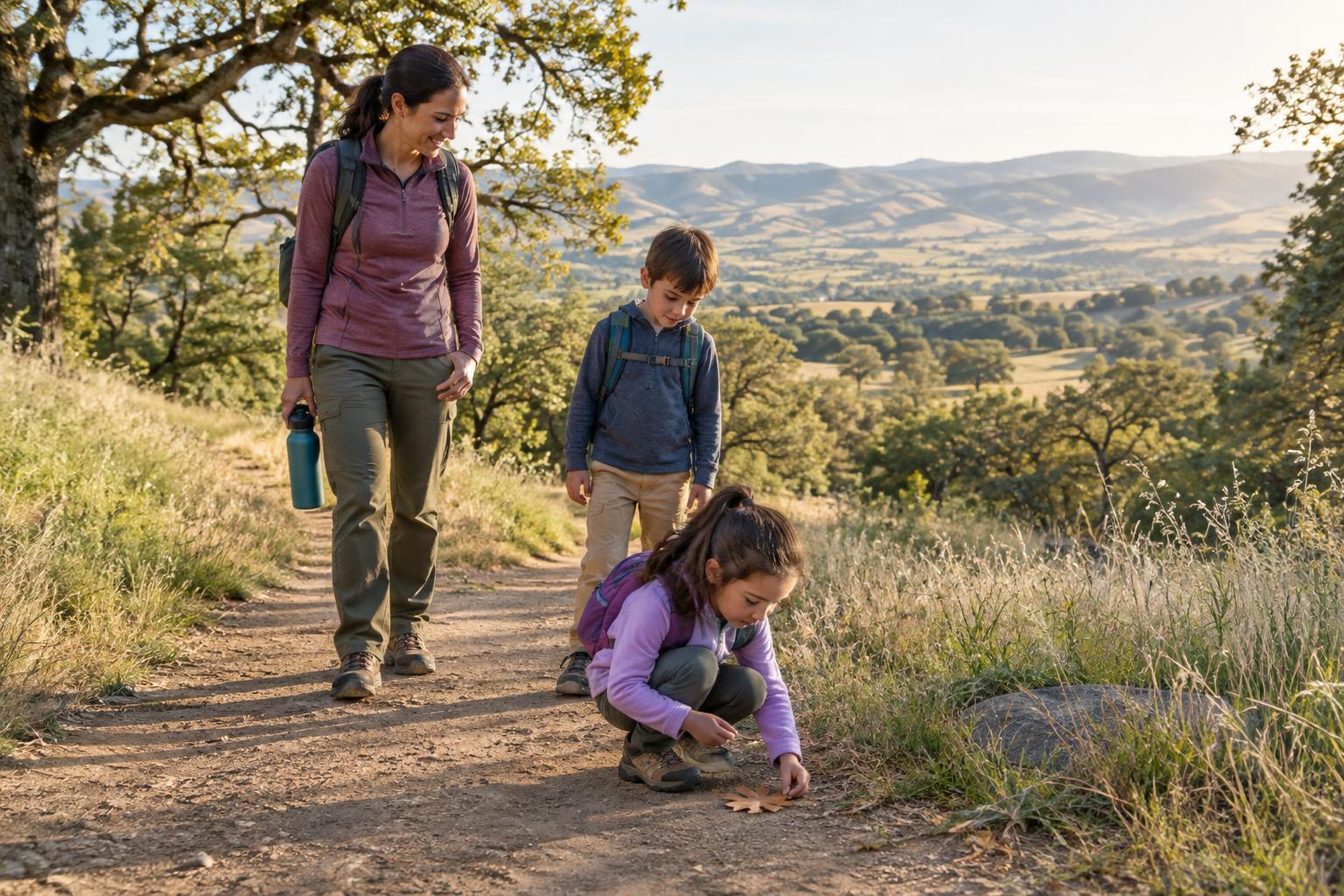
This matters most when a photogenic stand of flowers sits just beyond reach. A picture taken from the path preserves both the scene and the plants in it. If you are walking with children, make the trail edge part of the game: see how many colors and leaf shapes everyone can spot without crossing it. Keep dogs on a leash wherever required, and close any permitted gates behind you. A small choice by each visitor adds up over a busy walking season.
Take photographs, not flowers
A flower in the ground offers more than a brief souvenir. It can provide food or shelter for insects, set seed, and remain for the next person to enjoy. Leave blossoms, seed heads, rocks, and other natural finds where they are. If you want a reminder of the day, photograph a plant from several angles or jot down a description of its color, leaves, and surroundings when you get home.
For close photographs, use your camera’s zoom or crouch on the trail rather than moving closer through the plants. Watch where a backpack, tripod, or seated companion lands, too. It can be tempting to arrange a scene by bending stems or clearing away grasses, but the unarranged setting often tells a better story. Include the wider hillside in a few frames; it records the light, terrain, and sense of place that made the walk memorable.
Leave room for the next visitor
Pack out everything you bring, including food scraps and pet waste where pets are permitted. Food remains may seem natural, but they do not belong beside the trail. Enjoy a snack at an appropriate stopping place rather than spreading a blanket over plants, and use established facilities when available. If you encounter wildlife, give it space and observe quietly.
Before heading back, take one last look at the hillside from the path. You may notice a flower you overlooked on the way in or see the same slope in different light. A good wildflower walk does not require a bouquet, a dramatic photograph, or a long itinerary. It ends with muddy shoes perhaps, a few observations to share, and the blooms still rooted where you found them.